
Last updated November 25, 2026
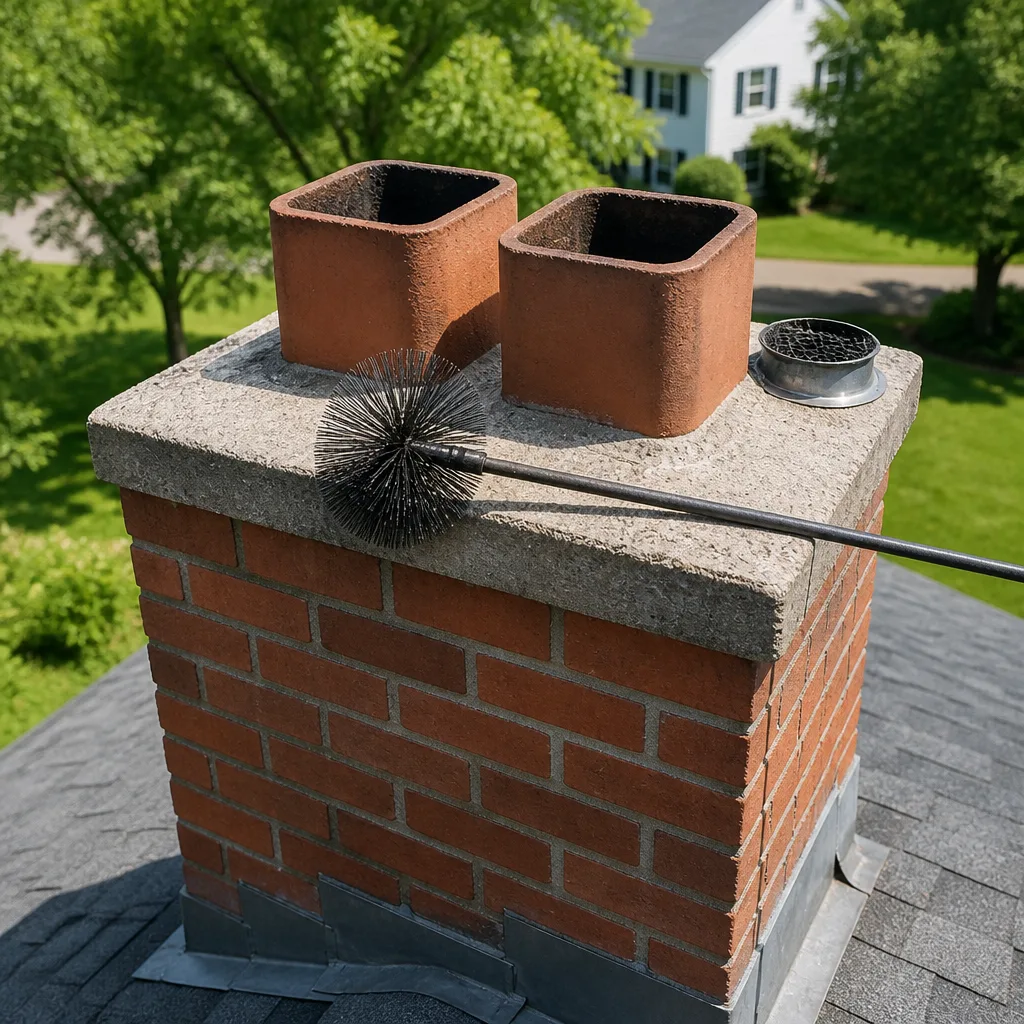 Sweep & inspection
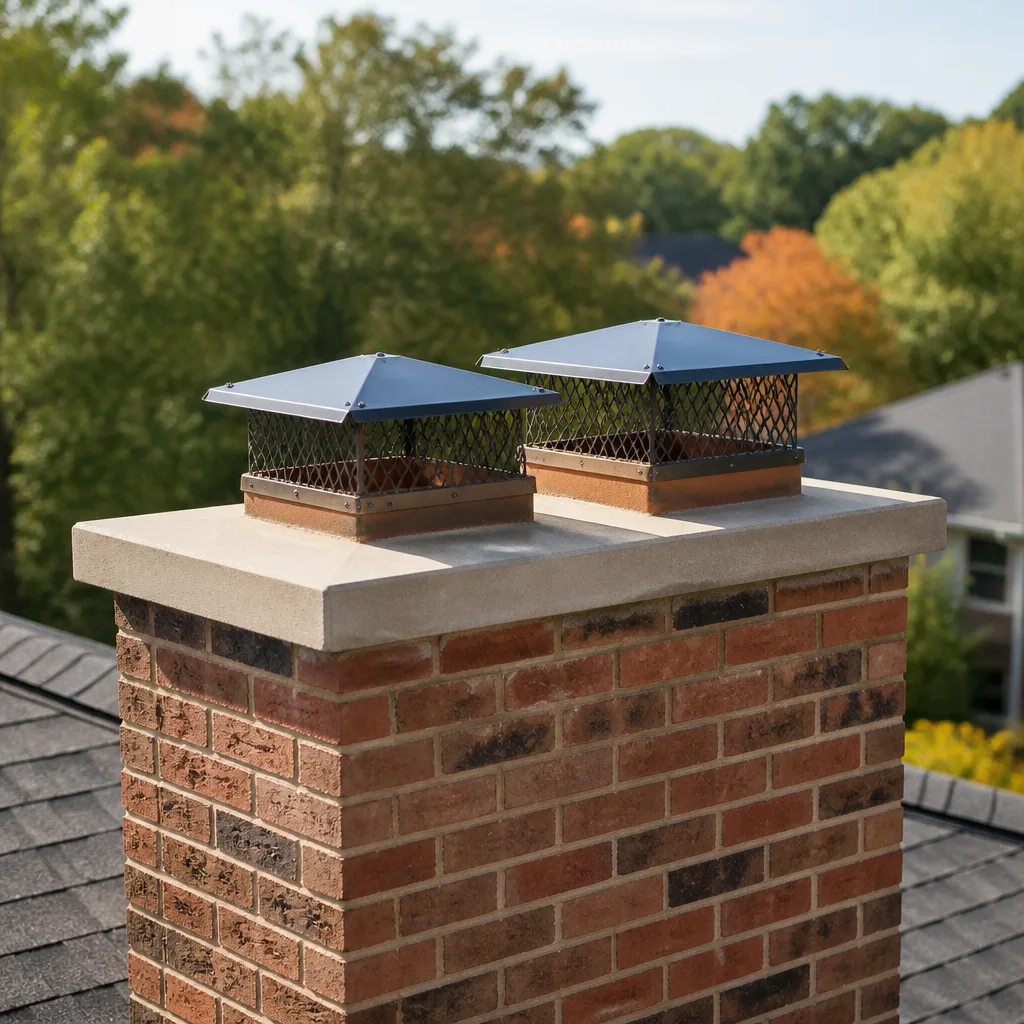 Caps & crowns
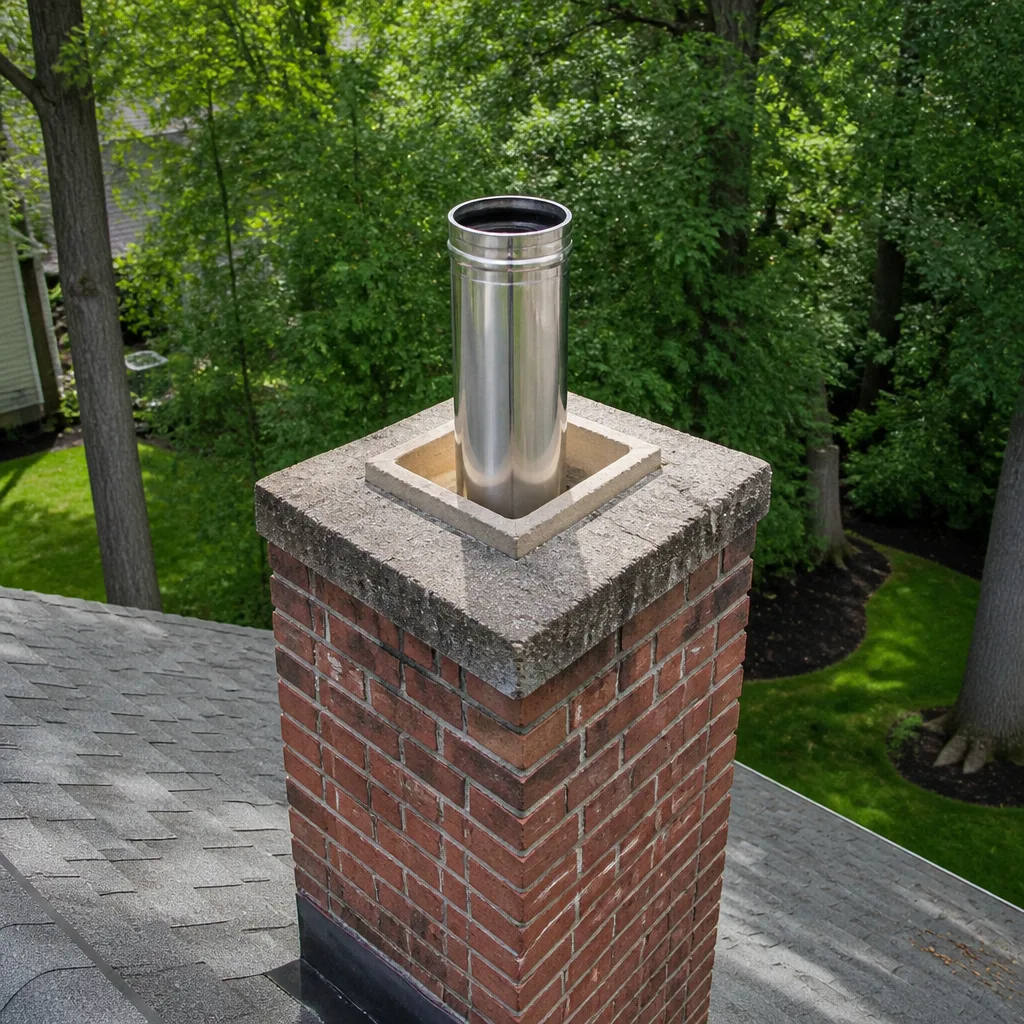 Flue relining
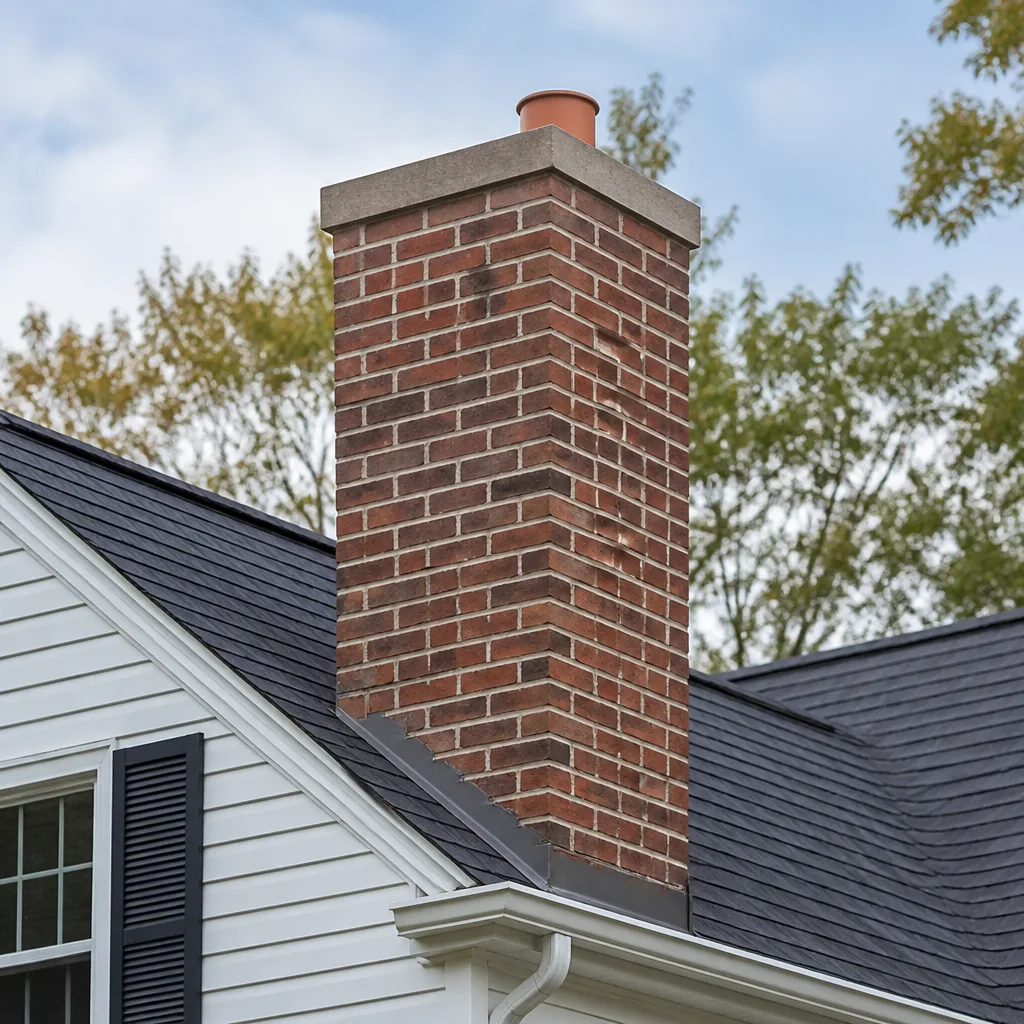 Masonry repair
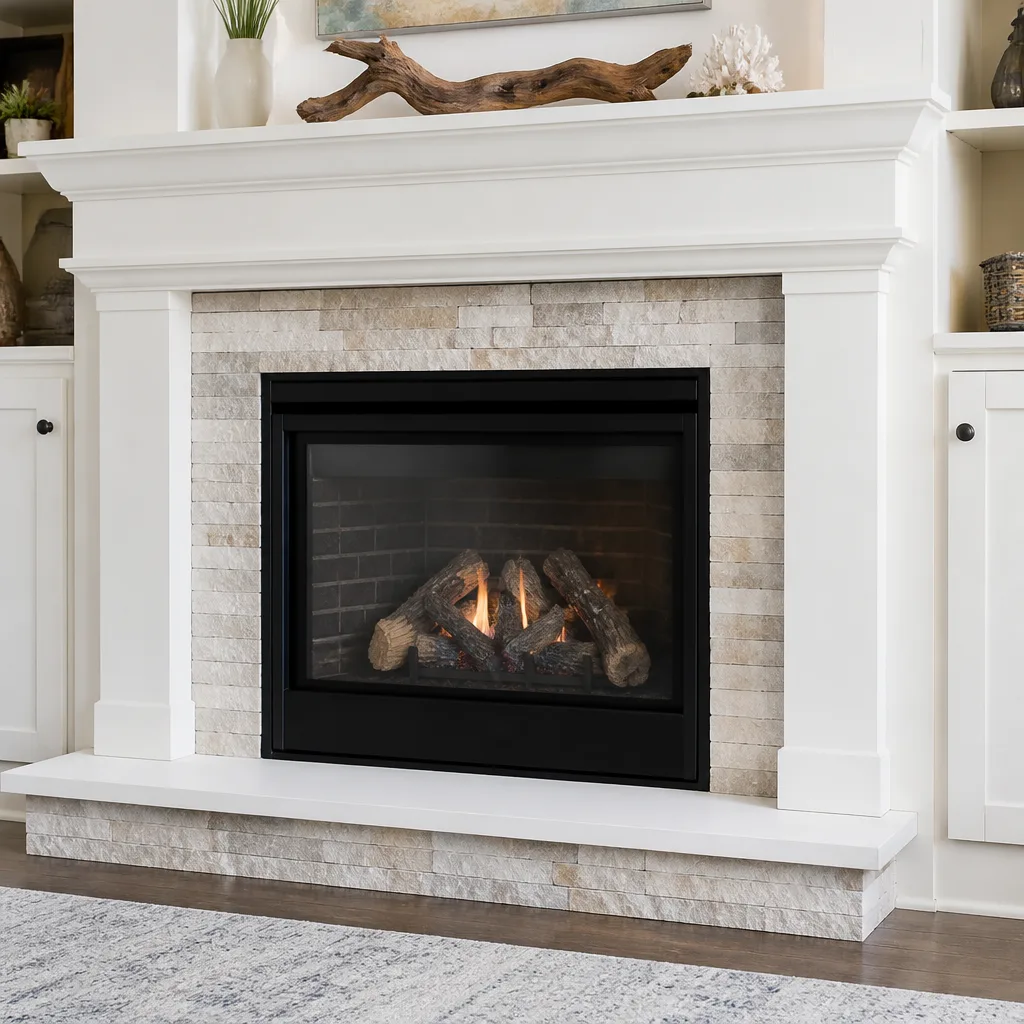 Gas fireplace service
Level 1 sweep and inspection to the NFPA 211 annual standard - flue, crown, cap, and flashing checked and photographed
Chimney sweep logs do not sweep chimneys. They loosen some creosote - which then falls where a brush and vacuum still have to collect it.
Chimney Sweep Maintenance Schedule: What to Do and When
A wood-burning fireplace used three nights a week through a Woodbridge winter needs service on a completely different timeline than a gas insert burning daily. Yet most maintenance guides treat every chimney the same way, handing out one annual-sweep rule as if fuel type and appliance type didn’t change anything. That’s how preventable damage accumulates quietly behind a wall.
This guide builds a schedule you actually decide from: your appliance, your fuel, and how much you burn. You’ll learn when to sweep, when to inspect, which tasks are truly annual and which wait for a condition to trigger them, and what Woodbridge’s mild seasonal swing does to mortar and crown over time.
Quick Answer
Wood-burning chimneys should be swept and inspected once a year, or sooner once creosote buildup reaches 1/8 inch. Gas appliances need an annual inspection but usually not an annual sweep. Every chimney, regardless of fuel, gets a visual inspection each year and a camera inspection of the flue on a longer interval or when a problem is suspected.
Styles & brands we work with
- Sweep & inspection
- Caps & crowns
- Flue relining
- Masonry repair
- Gas fireplace service
Table of Contents
- Why There’s No Single Chimney Maintenance Schedule
- Schedules by Appliance Type
- The Cords-Per-Year Rule for Wood Burners
- Spring vs. Fall: What Happens in Each Season
- Annual Tasks vs. Condition-Triggered Tasks
- How Woodbridge’s Temperature Swing Affects Your Chimney
- The Three Levels of Chimney Inspection
- Keeping a Chimney Maintenance Record
Why There’s No Single Chimney Maintenance Schedule
Creosote forms at different rates depending on what you burn and how hot the fire runs. A slow, smoldering wood fire deposits far more creosote than a hot, clean burn. A gas appliance produces almost none, but it can still develop corrosion, condensation, and blocked venting. So the question “how often should a chimney be swept” has two different answers sitting side by side: one for wood, one for gas.
The National Fire Protection Association’s standard 211 sets the floor for all of this. It calls for chimneys, fireplaces, and vents to be inspected annually and cleaned as needed. Notice the wording: inspected annually, cleaned as needed. Those are not the same job, and treating them as one is where homeowners get into trouble.
At Chimney Sweep Woodbridge, we build the calendar around three variables:
- Fuel type. Wood deposits creosote and ash. Gas deposits moisture and can corrode a flue.
- Appliance type. An open hearth burns inefficiently and drafts loosely. A sealed wood stove or insert burns hotter and cleaner but concentrates heat in the flue.
- Usage volume. Nights per week and cords per year move the needle more than any single rule.
Get those three right and the schedule writes itself. Get them wrong and you either over-service a gas insert that didn’t need sweeping, or you let a heavily used wood fireplace go two winters on one cleaning.
Schedules by Appliance Type
The table below is the decision core of this guide. Match your setup to its row and you have your baseline inspection frequency and your sweep trigger.
- Open-hearth wood fireplace: annual sweep and inspection, sooner if you burn heavily. Open hearths draft loosely and cool the smoke, which is exactly the condition that lays down creosote fast.
- Wood stove or insert: annual sweep and inspection. A sealed unit burns hotter, so the flue stays cleaner per cord, but concentrated heat stresses joints over time and a hot flue is unforgiving of a cracked tile.
- Gas insert: annual inspection. Sweeping isn’t the routine need here; checking the venting, the termination, and for corrosion or condensation is. Gas appliances can be inspected and left alone if the flue is clear.
- Gas logs in an open fireplace: annual inspection, and pay close attention to the damper and the firebox. Many gas log sets vent through the original masonry flue, and a partially closed or blocked path is a real hazard.
- Pellet appliances and any sealed vent: annual inspection plus a sweep when the vent shows accumulation. Pellet venting can clog at the termination and at elbows, so the inspection has to follow the whole run, not just the firebox.
One pattern to notice: every row says annual inspection. None of them say annual sweep without qualification. That’s the distinction most guides blur. If your appliance is wood-burning and used regularly, expect the sweep to come with the inspection. If it’s gas, expect the inspection alone to be enough most years.
The Cords-Per-Year Rule for Wood Burners
Here’s a rule of thumb worth keeping: for wood burners, the amount of fuel you burn is a better scheduling signal than the calendar. Roughly, when you’re burning a cord or more in a season, assume an annual sweep minimum, and step up the frequency as volume climbs. Burn a face cord or less and the annual inspection tells you whether a sweep is even needed that year.
The rule works because creosote is a byproduct of incomplete combustion, and the more fuel you push through, the more chance some of it goes up the flue as vapor and condenses. Cold flue surfaces make that worse. A fire that’s lit lazily and smoldered deposits more than one that’s brought up to temperature and burned clean.
For gas appliances, the equivalent metric isn’t cords, it’s hours of operation. A gas insert run daily through the cooler months earns a closer look at its venting and termination than one lit a handful of times a year. You’re not counting fuel; you’re counting run time, because the concerns with gas are condensation and corrosion, not soot.
What to check yourself before you call anyone:
- Look up the flue from the firebox with a flashlight. Visible soot or a shiny, glazed surface means it’s time.
- Check the firebox walls and the damper for cracks or rust-through.
- Note any draft problem: smoke spilling into the room, a fire that won’t catch, or a smell on windy days.
- From the ground, look at the chimney top for a missing or damaged cap and for loose or stained masonry.
If any of those raise a flag, book an inspection rather than waiting for the next scheduled sweep. When work does turn out to be needed, it’s our chimney sweep and inspection visit that confirms it with camera evidence you can see.
Spring vs. Fall: What Happens in Each Season
Spring and fall are two different jobs on the maintenance calendar, and doing them in the wrong order costs you visibility.
Spring is for discovery. After a season of burning, you’ve got fresh evidence of how the chimney weathered the cooler months: moisture stains, spalling at the crown, a cracked flue tile visible in the firebox. A post-season inspection catches winter-driven deterioration while it’s still fresh and while there’s time to plan repairs before autumn. This is also the natural time to check the crown and cap, because moisture damage from the wet season is easiest to trace then. If the crown has lost its protective coat, spring is when a resurfacing product like HeatShield has the best window to cure and set before the next burn season.
Fall is for readiness. Before the first fire, you want a clean flue and a confirmed draft. A pre-season sweep clears the creosote and soot that accumulated last season, and the inspection confirms nothing changed over the summer. If you did a spring repair, fall is when you verify it.
In practice, the ideal year looks like this:
- Late winter or early spring: post-season inspection, camera review of the flue if indicated, crown and cap check.
- Spring or early summer: any masonry, crown, cap, or liner work scheduled while the chimney is out of use.
- Early fall: pre-season sweep and a visual inspection to confirm readiness.
- Any time: call if you notice a change (draft failure, smoke spillage, water staining).
If you only do one visit a year, moving it to spring gives you more room to repair before the next season. Fall stays the popular choice because it’s tied to the first fire, but spring is when problems are easier to see. Either way, our team at Chimney Sweep Woodbridge books the visit and sets a flat price before we arrive.
Annual Tasks vs. Condition-Triggered Tasks
Not everything on a chimney belongs on a twelve-month clock. Some tasks are genuinely annual; others wait until a condition appears. Separating the two keeps you from paying for work you don’t need and from skipping work that protects the whole system.
Genuinely annual:
- Visual inspection of the firebox, flue, damper, and chimney exterior.
- Sweep, if the appliance is wood-burning and used regularly.
- Check the cap is intact, seated, and clear of nesting debris.
- Check for water intrusion at the crown and flashing line.
Condition-triggered:
- Crown coat reapplication. A crown coat doesn’t fail on a schedule; it fails by condition. Inspect it visually every couple of years and recoat when you see cracking, a crumbling surface, or water tracking into the masonry. A properly applied crown, sealed correctly, can go years between recoats.
- Camera inspection of the flue. This isn’t needed every year on a healthy flue. It’s triggered by a known event: a chimney fire, a lightning strike, a masonry repair, a liner concern, or a draft problem that a visual inspection didn’t explain. It’s also the standard check before we recommend any liner work, so you can see the condition on camera yourself before deciding.
- Liner repair or replacement. Triggered by evidence, not age. A camera inspection shows whether flue tiles are cracked, spalled, or missing and whether a flexible liner system is the right fix. When it is, we install DuraFlex liner systems, the professional-trade product suited to relining an older or damaged flue.
- Mortar and brick repair. Triggered by visible spalling, a loose brick, or a deteriorated joint. Don’t wait for a schedule; note it and get it looked at.
The honest rule: we don’t recommend repairs you can’t see the reason for. If a camera inspection shows a sound flue, we say so, and it can safely wait. If it shows a cracked tile or a failing crown, you get the photo and the plain explanation before you decide anything.
How Woodbridge’s Temperature Swing Affects Your Chimney
Woodbridge’s winters are mild, but the seasonal swing between a cool, wet stretch and a warm, dry one does steady work on masonry. Mortar joints and a crown face expand and contract with those temperature changes, and the wet season pushes moisture into any crack that’s already open. Over a few seasons, that’s enough to turn a hairline crack into spalling brick and a crown that sheds its topcoat.
That’s why a visual crown check every two to three years matters specifically here. It’s not about severe cold; it’s about the repeated wet-dry cycle finding the weakest point in the masonry and widening it. A crown that’s sound and properly sealed sheds water instead of holding it. Add a correctly seated cap and you’ve closed off the two most common paths water takes into a chimney in this climate.
When we look at a Woodbridge chimney in the warmer months, the crown and cap are almost always the first thing we check, because that’s where the seasonal swing leaves its mark. If the crown surface has broken down, we resurface it with HeatShield rather than layering on a coating that won’t bond. And when a cap needs replacing, we fit a Gelco or Olympia Chimney cap sized to the flue, so the termination is protected, not just covered.
You can read more about that work on our chimney cap & crown page. The point for scheduling is simpler: put a crown and cap check on the calendar every second or third year even when nothing’s visibly wrong.
The Three Levels of Chimney Inspection
Chimney inspections come in three recognized levels, and knowing which one you need tells you what the visit will involve. Most annual service is a Level 1. The higher levels come into play when there’s a reason to look harder.
- Level 1: the routine annual inspection. A visual check of readily accessible parts of the chimney, firebox, and venting, plus the sweep if needed. This is what most Woodbridge homeowners get each year, and it’s enough when the appliance hasn’t changed and there’s no known problem.
- Level 2: the camera inspection. This adds a video scan of the flue and covers accessible parts of the attic, crawlspace, and other areas around the chimney. It’s the level to ask for after a chimney fire, a change in appliance or fuel type, a property sale, an earthquake, or any suspected liner or draft problem. It’s also what we use before recommending a liner or major repair, because it shows the condition directly.
- Level 3: the diagnostic inspection. This is a Level 2 plus opening up concealed areas, used only when a serious hazard is suspected and the cause can’t be found any other way. It’s rare, and it’s the last resort, not the first step.
Here’s the practical takeaway. Routine annual service should be a Level 1, and the higher levels are triggered by specific events or findings, not by the calendar. If someone tells you a Level 2 is required every single year regardless of your setup, ask why. If a camera scan turns up something, ask to see the video; you should always be able to see the condition before you agree to work. When a full reline is the right call, we install DuraFlex liner systems, and when a fireplace’s firebox or damper needs repair, that falls under our fireplace repair scope, handled in the same relationship as the sweep and inspection.
Keeping a Chimney Maintenance Record
A simple record makes every future decision easier. Note the date of each visit, what was done, and what was found. If a crown was recoated, write the date. If a camera inspection found a hairline in the flue, note what the technician said about it. Two minutes of record-keeping is why a later conversation can be specific instead of a guess.
What to keep:
- Date and description of each sweep and inspection.
- Any photo or video findings, saved and dated.
- Dates of repairs: crown coat, cap replacement, mortar repair, liner work.
- Your appliance and fuel type, so the schedule matches what you actually burn.
This is also how you’ll know whether a recommendation is genuinely due. When the record shows a crown was recapped two years ago and the flue was camera-inspected recently and sound, you can ask good questions about any proposed work. That’s the relationship we want.
Common Mistakes to Avoid
- Applying the annual-sweep rule to everything. A gas insert usually needs an inspection, not a yearly sweep. Treating both the same either wastes money on gas or leaves a wood flue under-serviced.
- Skipping the crown and cap between visits. In Woodbridge’s wet-dry swing, cracks widen quietly. A crown check every two to three years catches the problem while it’s still a recoat, not a rebuild.
- Assuming a camera inspection is annual. It’s triggered by an event or a suspicion. Insisting on it every year is as much a mistake as skipping it after a chimney fire.
- Judging a flue by the firebox alone. What you can see from the hearth is a small part of the system. A draft problem you can see at the firebox often starts higher up, at the cap, crown, or a damaged tile.
- Letting a generalist diagnose a specialized problem. Chimneys are a whole system, and lining, crown, cap, and masonry interact. A company that works on them exclusively knows how the pieces affect each other.
- Ignoring the draft symptom. Smoke spilling into the room or a fire that won’t catch is a signal, not bad luck. Treat it as a reason to book an inspection.
- Saving repairs until the cold season. Plan crown, cap, and masonry work in the warmer months so it’s finished before you need the chimney again.
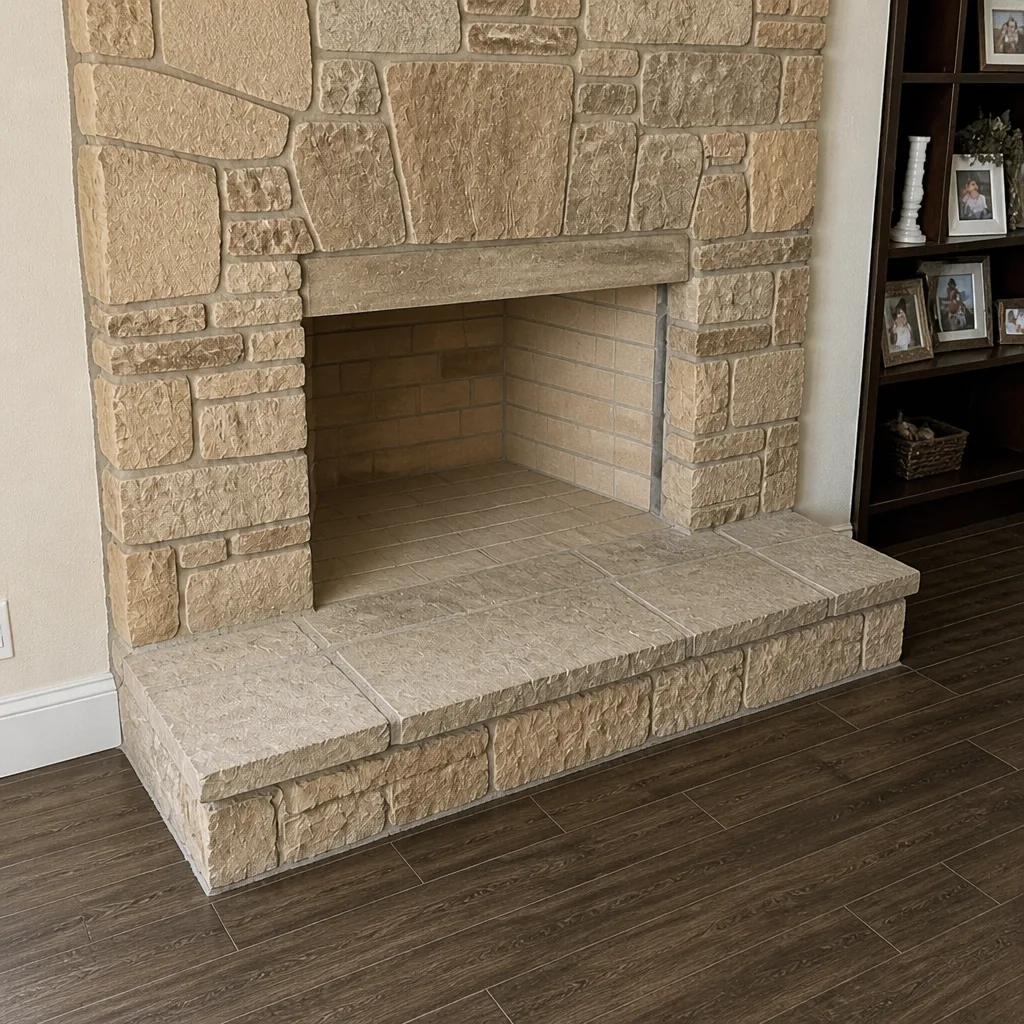
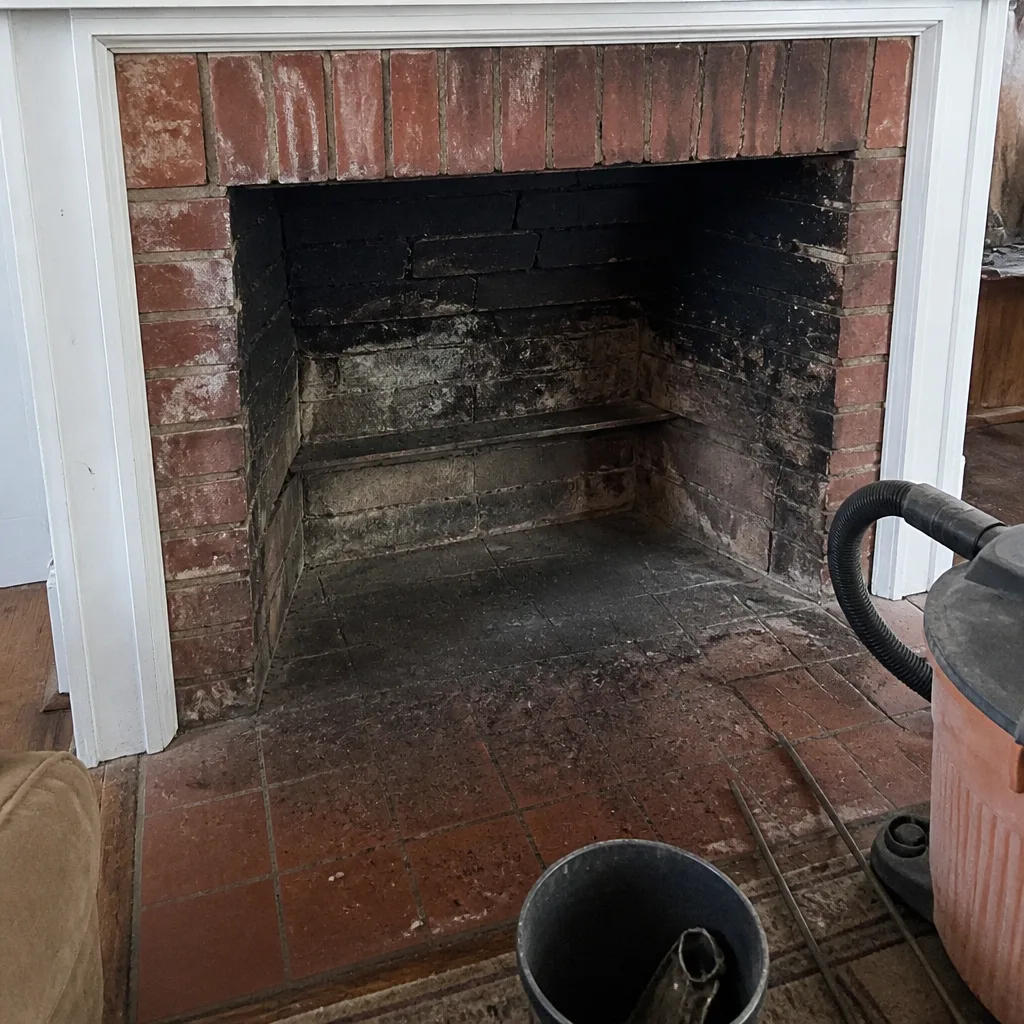
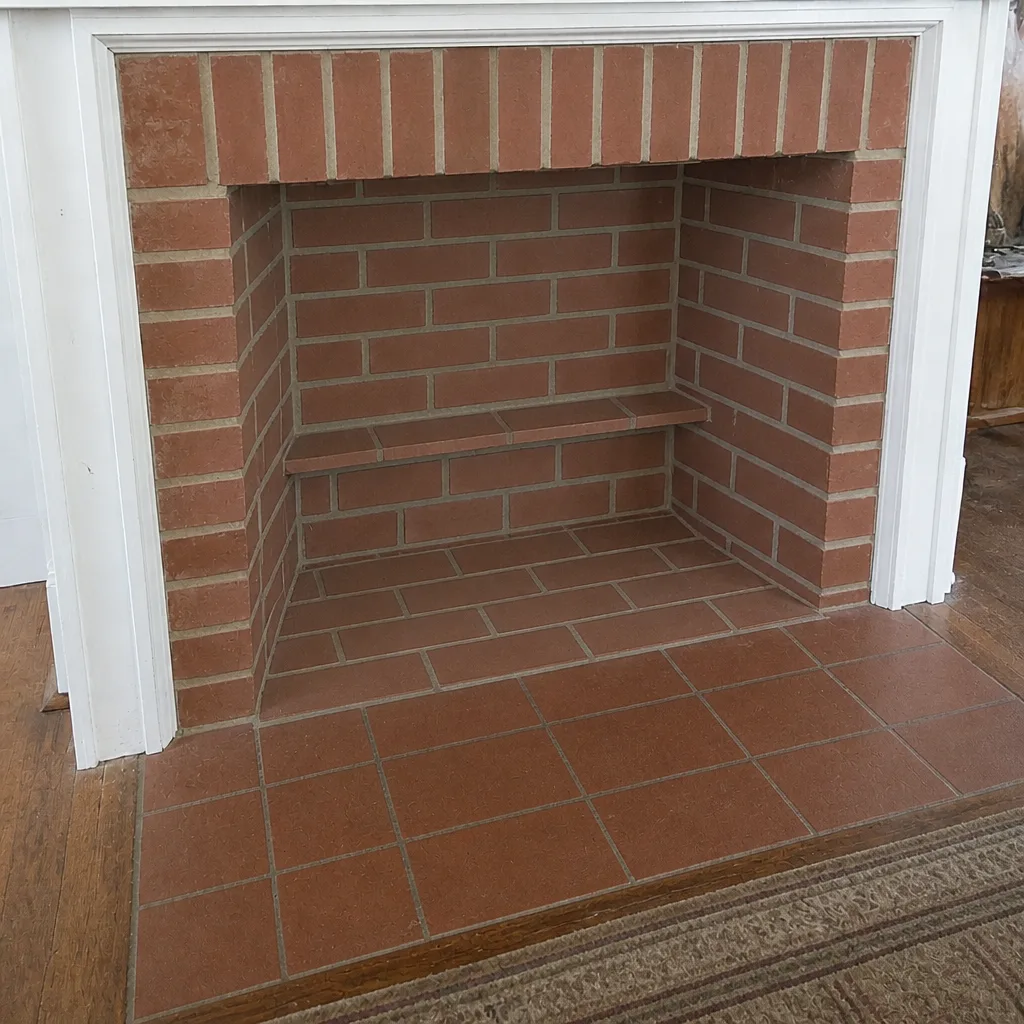
See the difference
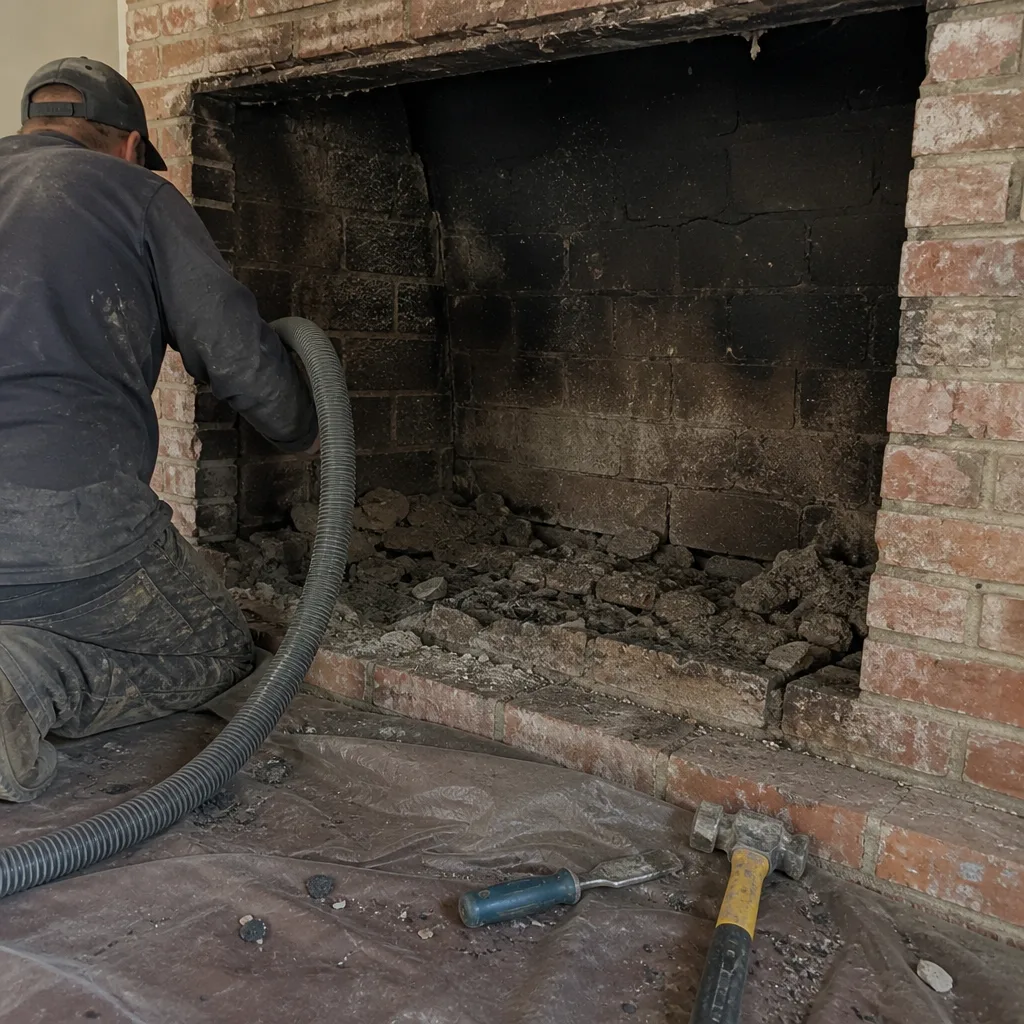 Before
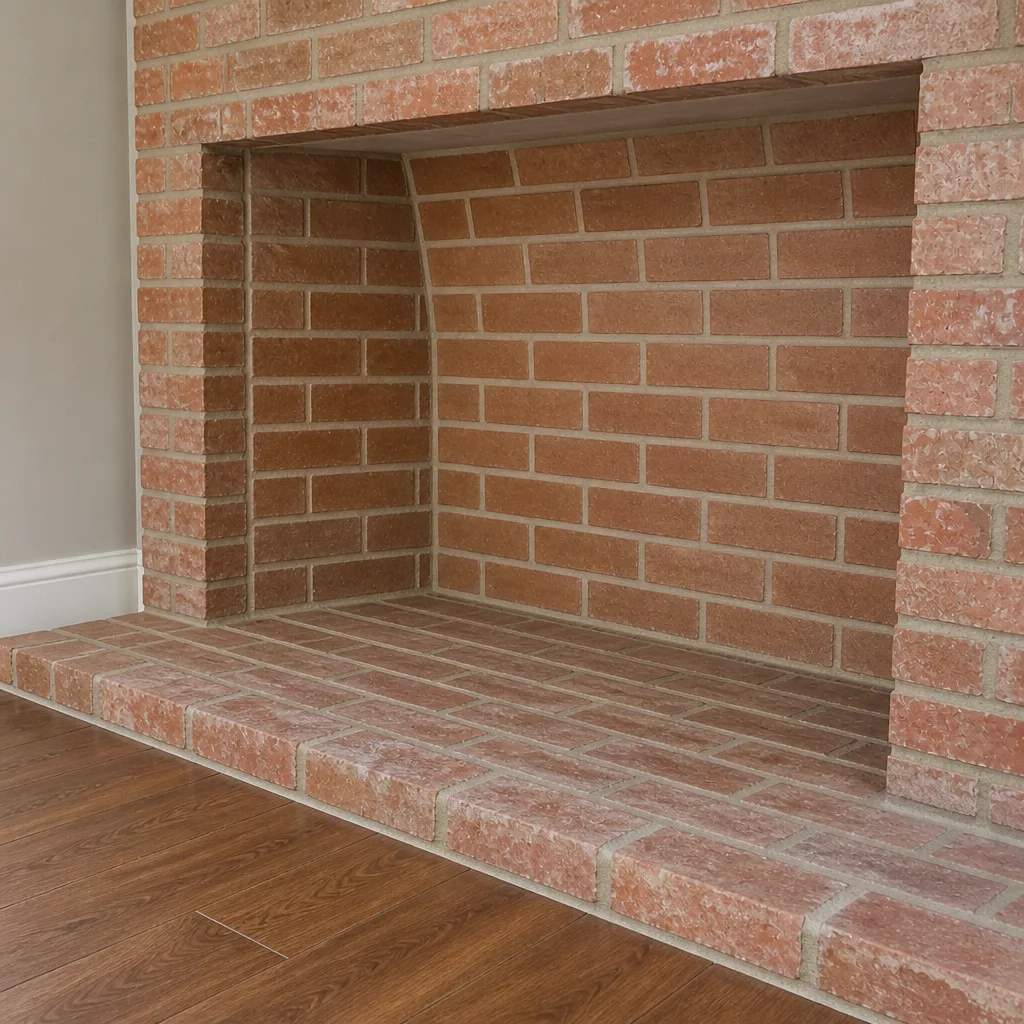 After
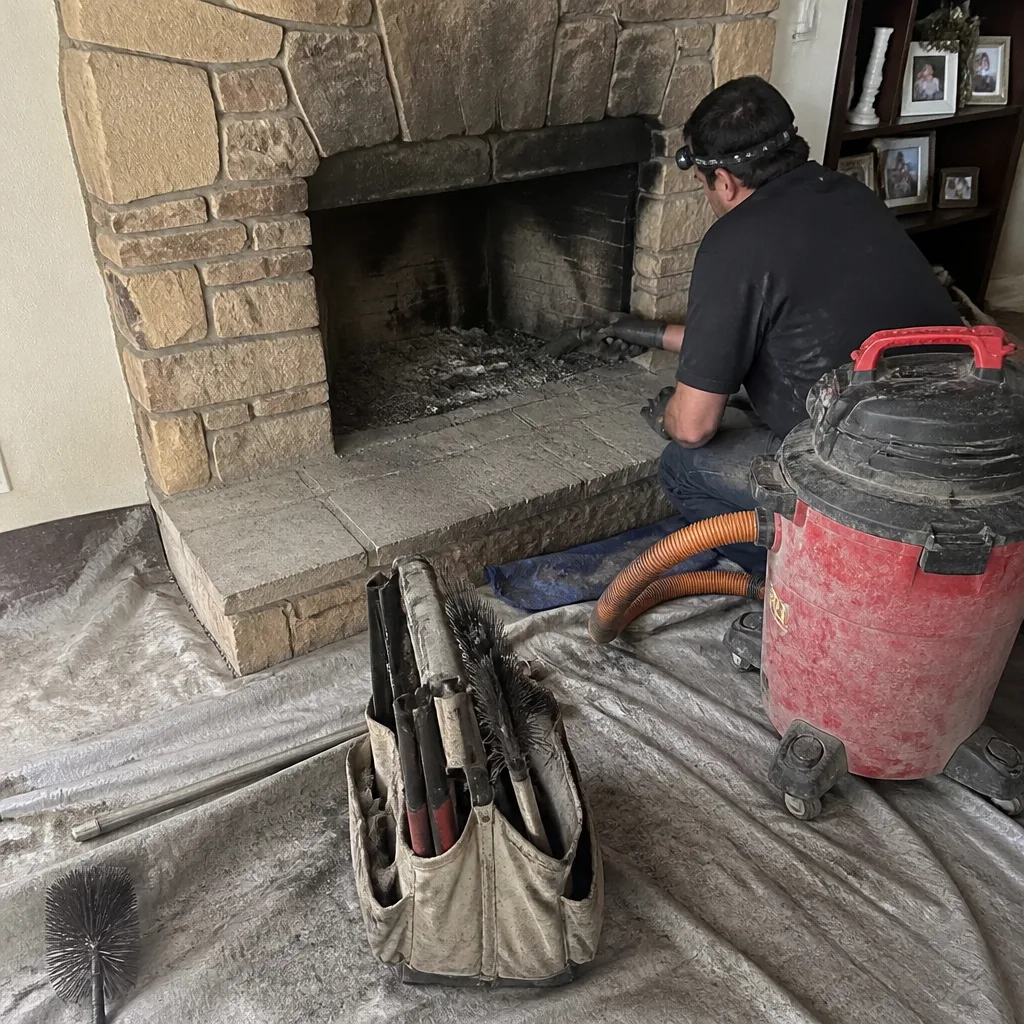 Before
 After
 Before
 After
When to Call a Professional
Call an inspection now, regardless of where you are on the calendar, if any of these apply:
- You’ve never had the chimney inspected and you don’t know its history.
- The fire smokes into the room or won’t draw.
- You notice water staining, spalling brick, or a loose cap.
- You’ve had a chimney fire, even a small one you put out yourself.
- You’ve changed the appliance, fuel type, or switched from wood to gas.
- You’re buying or selling a home and want the flue verified.
For a routine sweep, inspection, cap and crown replacement, or a full liner and fireplace repair, Chimney Sweep Woodbridge offers free estimates in Woodbridge. Call (833) 513-8683. We answer 24/7. Fast dispatch from 7am to 7pm, Sunday through Friday. Our technicians have up to 11 years of experience, and we use professional-trade materials from DuraFlex, HeatShield, Gelco, and Olympia Chimney because the chimney is a life-safety system, not a place for the cheapest product on the shelf.
Frequently Asked Questions
A wood-burning chimney should be swept at least once a year, and sooner if creosote buildup reaches 1/8 inch. If you burn more than a cord a season, keep an annual sweep as the floor and step up the frequency as volume climbs. Call (833) 513-8683 for a free estimate.
A gas fireplace or insert needs an annual inspection, but usually not an annual sweep. Gas produces little soot, so the routine need is checking the venting, termination, and for corrosion rather than cleaning out creosote. Call (833) 513-8683 to book the inspection.
Yes, and every two to three years is a sensible interval in Woodbridge’s wet-dry swing. The crown and cap are where water gets in, and catching a failing coat early turns a recoat into a repair you can plan instead of a rebuild you can’t. Call (833) 513-8683 for a free estimate.
In late winter or early spring, while the evidence from the wet season is still fresh. That’s when water staining, crown cracks, and spalling are easiest to trace, and there’s time to schedule repair work before the next burn season. Call (833) 513-8683 with what you’re seeing.
No. A camera inspection is triggered by an event or a suspicion, not by the calendar. It’s the standard check after a chimney fire, before any liner recommendation, or when a visual inspection can’t explain a draft problem. When it’s needed, you should be able to see the findings on camera for yourself. Call (833) 513-8683 to book one.
For a lightly used gas appliance, a skipped year is often caught at the next inspection with no consequence. For a regularly used wood fireplace, a missed year lets creosote build toward a level that raises the risk of a flue fire, and lets small crown and mortar problems widen. Call (833) 513-8683 for a free estimate and we’ll tell you plainly what’s urgent and what can safely wait.
The Bottom Line
The right maintenance schedule is built from your appliance, your fuel, and how much you burn, not from one blanket annual rule. Wood-burning fireplaces and stoves want an annual sweep and inspection, with a wait-until-needed camera check on the flue. Gas inserts and logs want an annual inspection, usually without a sweep. A crown and cap check every two to three years keeps Woodbridge’s seasonal swing from turning small cracks into real repairs. The tasks that ride the calendar and the tasks that wait for a condition are different, and knowing which is which is the whole game. From inspection to full repair, the full system is checked in one relationship. Call (833) 513-8683 for a free estimate.
Written by the team at Chimney Sweep Woodbridge.