
Last updated November 25, 2026
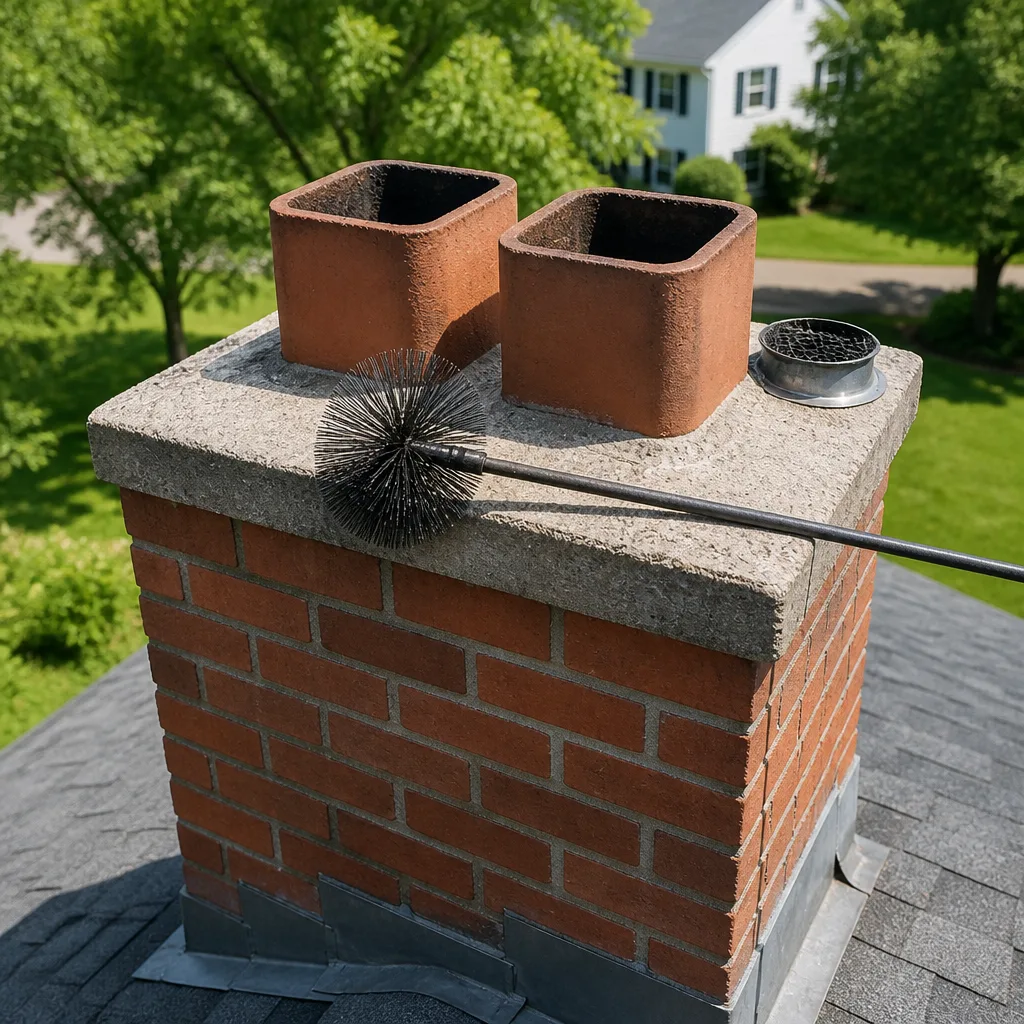 Sweep & inspection
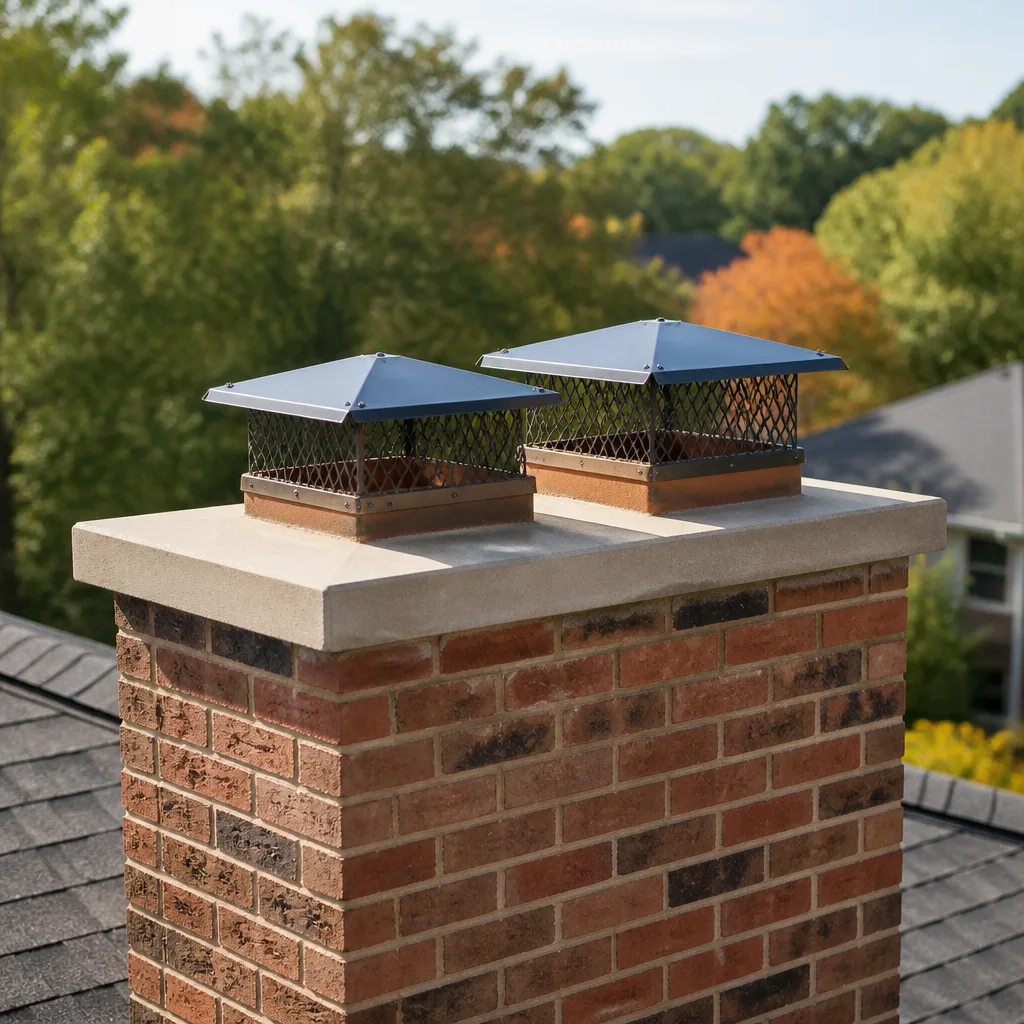 Caps & crowns
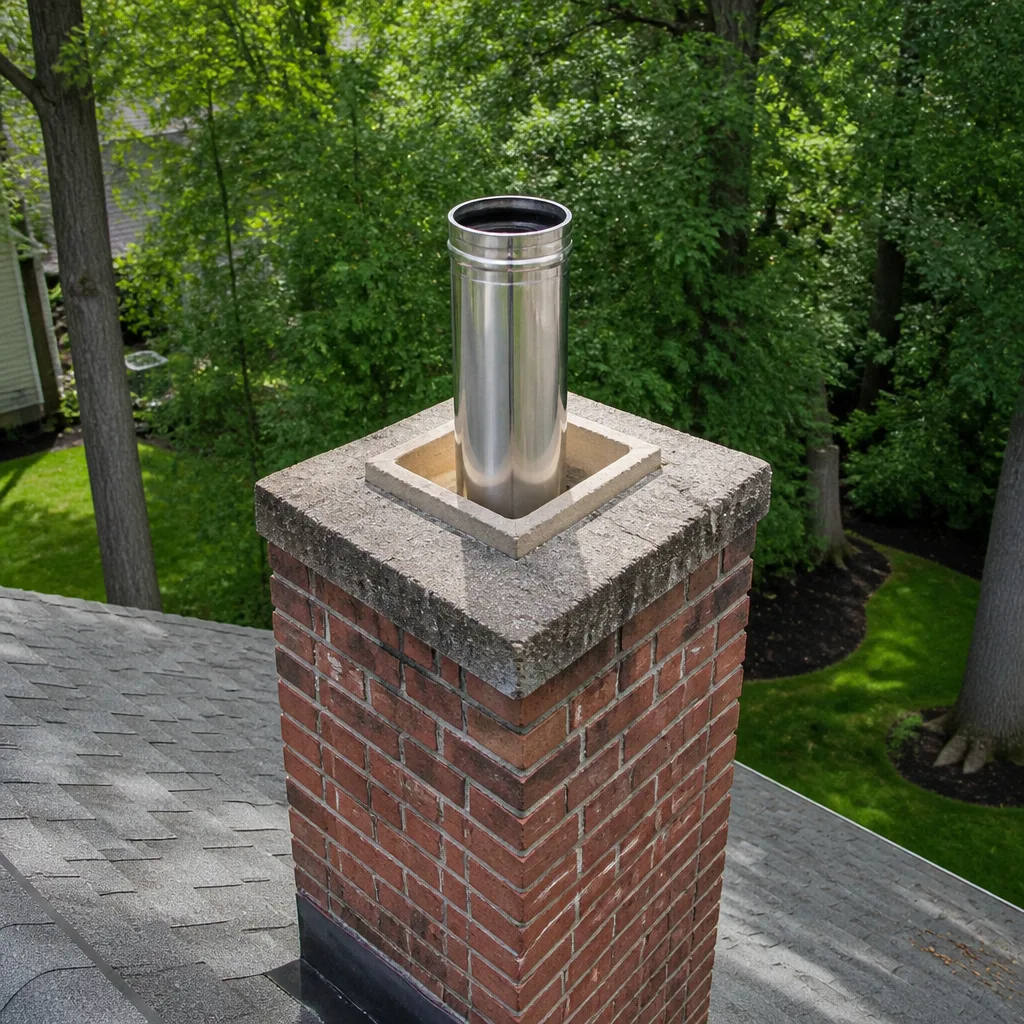 Flue relining
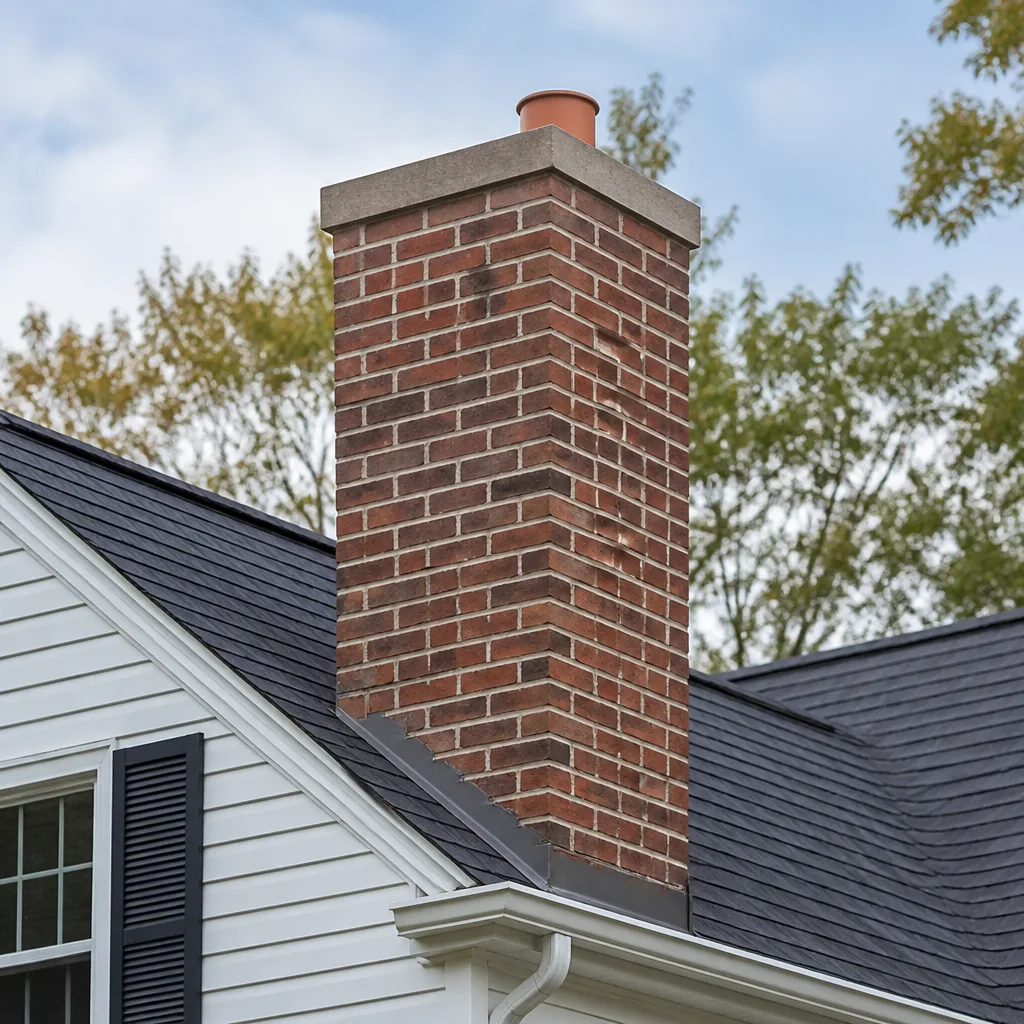 Masonry repair
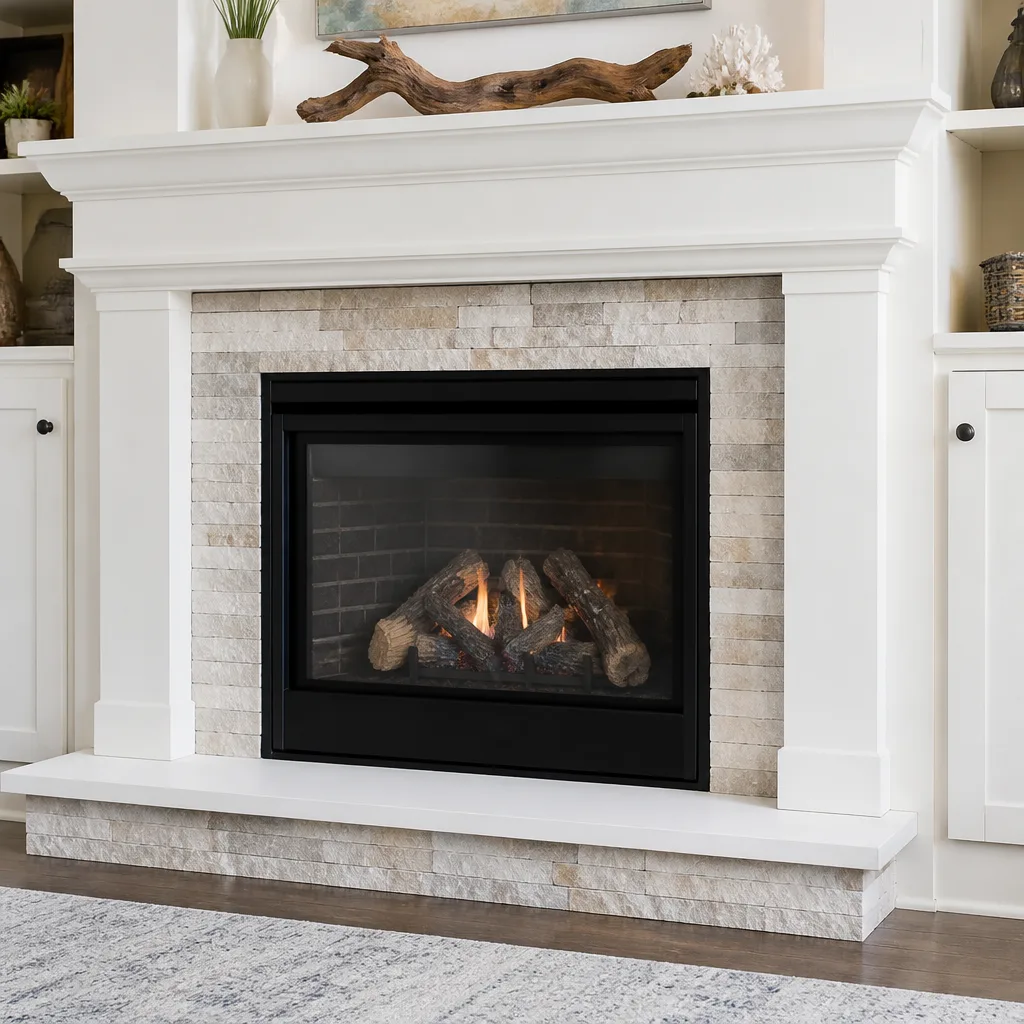 Gas fireplace service
Level 1 sweep and inspection to the NFPA 211 annual standard - flue, crown, cap, and flashing checked and photographed
Chimney sweep logs do not sweep chimneys. They loosen some creosote - which then falls where a brush and vacuum still have to collect it.
Chimney Cleaning Warning Signs: A Woodbridge Homeowner’s Reference Guide
Most homeowners assume a chimney problem announces itself with smoke rolling into the living room. It rarely does. The signs that matter most in Woodbridge tend to be quiet: a faint sour smell in a room where no fire has burned for weeks, a chalky white bloom creeping across the brick, a fire that needs coaxing when it used to catch fast. None of these look dramatic, and that’s exactly why they get ignored until a sweep finds something serious. This guide teaches you to read your own fireplace the way a technician does, so you can tell the difference between a “schedule it soon” issue and a “don’t light another fire” emergency.
Quick Answer
In Woodbridge, the warning signs that should stop you from lighting a fire are a strong smoke or creosote smell coming from a cold fireplace, visible cracks or gaps in the flue tiles, rust or white mineral staining inside the firebox, and smoke spilling back into the room during a fire. Signs that mean “book a sweep soon” rather than “stop” include a cracked crown, missing mortar on the chimney top, efflorescence on the exterior brick, and a sluggish draft. Anything you can smell or see inside the house is worth a professional look before the next burn.
Styles & brands we work with
- Sweep & inspection
- Caps & crowns
- Flue relining
- Masonry repair
- Gas fireplace service
Table of Contents
- The Severity Index: Cosmetic, Functional, and Safety-Critical Signs
- Reading the Smell: Normal Fireplace Odor vs. Three Problem Profiles
- What You Can See From the Firebox Floor
- What Unusual Fire Behavior Tells You
- Exterior Warning Signs You Can Spot From the Ground
- Creosote Stages and Why the Third Stage Changes Everything
- Warning Signs in Gas Inserts and Older Masonry Chimneys
- How a Technician Reads Your Chimney: A Numbered Walkthrough
The Severity Index: Cosmetic, Functional, and Safety-Critical Signs
Not every warning sign carries the same weight, and the single most useful skill you can develop as a Woodbridge homeowner is sorting what you notice into three buckets. Getting this ranking right prevents two opposite mistakes: panicking over a cosmetic blemish, and shrugging off a structural finding that deserves immediate attention.
Tier one: cosmetic. These are appearance and surface issues. Efflorescence (the white, powdery bloom on exterior brick) is a moisture signal but not a fire risk on its own. Minor spalling, where the face of a brick flakes off a little, belongs here too. Cosmetic signs mean water is finding its way in somewhere and the chimney should be looked at, but they don’t stop you burning.
Tier two: functional. The chimney still works, but not the way it should. A damper that no longer seals or opens smoothly, a persistent downdraft that pushes cold air down the flue, a cap that’s come loose, or a fire that’s noticeably harder to light than it used to be. Functional problems cost you efficiency and comfort, and they tend to worsen if left alone. Schedule these.
Tier three: safety-critical. These are the findings that turn a fireplace from an appliance into a hazard:
- Stage 3 creosote, the glazed, tar-like buildup that fuels a chimney fire
- Fractured or missing flue tiles, or gaps in the liner
- Smoke or exhaust spilling back into the room
- A strong creosote or smoke smell from a fireplace that hasn’t been used
- Rust streaks or heavy white staining inside the firebox, which often point to a compromised liner or water intrusion into the flue
Safety-critical signs are a “don’t light a fire” verdict until a technician has looked. A full inspection and, where needed, relining with a DuraFlex system is the kind of repair that addresses the root of these findings rather than the surface. Our technicians have up to 11 years of experience reading exactly this kind of severity, and the reason we sort findings this way is simple: your flue is a life-safety system, and it deserves a ranking, not a shrug.
Reading the Smell: Normal Fireplace Odor vs. Three Problem Profiles
A wood-burning fireplace has a normal, faint smoky scent, especially on a cool, humid day when the chimney is cold and the pressure equalizes. That’s the smell of a fireplace that’s working. The smells that matter are different, and each one points at a different problem. Learning to tell them apart is the cheapest diagnostic tool you own.
Active creosote buildup. Creosote has a sharp, tarry, almost chemical smell, stronger than wood smoke and often described as acrid. It’s most noticeable on warm, still days or after a fire, when the flue is warm and the odor rises. If your fireplace smells like a road-repair crew rather than a campfire, there’s buildup in the flue that a sweep needs to remove. This is the smell that most often precedes a chimney fire.
Moisture intrusion. A damp, musty, earthy smell, like a basement or wet cardboard, points to water getting into the flue or firebox. In Woodbridge this often traces to a failed crown, missing mortar wash, or a cap that’s shifted, letting rain into a flue that should stay dry. Soot that’s turned to a paste, rust streaks, or white mineral staining usually accompany it.
Animal intrusion. Birds, squirrels, and other animals love an open flue, and the smell is unmistakable: a sharp, ammonia-like or animal odor, sometimes with scratching or fluttering sounds, especially in the early morning. The droppings and nesting material they leave behind are a fire hazard and a draft blocker. A proper cap from Olympia Chimney or Gelco keeps them out.
When the smell itself is the emergency. A strong smoke or creosote smell from a fireplace that is cold and hasn’t been used for weeks is a red flag. It frequently means the flue has lost its seal and is drawing air (and odor) back into the house through a compromised liner. Don’t light a fire to “see if it clears.” That’s the profile of a problem that makes every subsequent fire a structural risk, and it needs an inspection first.
If you’re unsure which profile fits what you’re smelling, write down what you notice, when you notice it, and whether the fireplace is warm or cold. That’s exactly the information a technician needs to know where to look. From that starting point, our chimney sweep can confirm the finding with a camera and show you what it sees.
What You Can See From the Firebox Floor
All three of these signs are readable from inside the firebox with a flashlight, no tools and no ladder. Each one tells you something specific about the flue behind the wall.
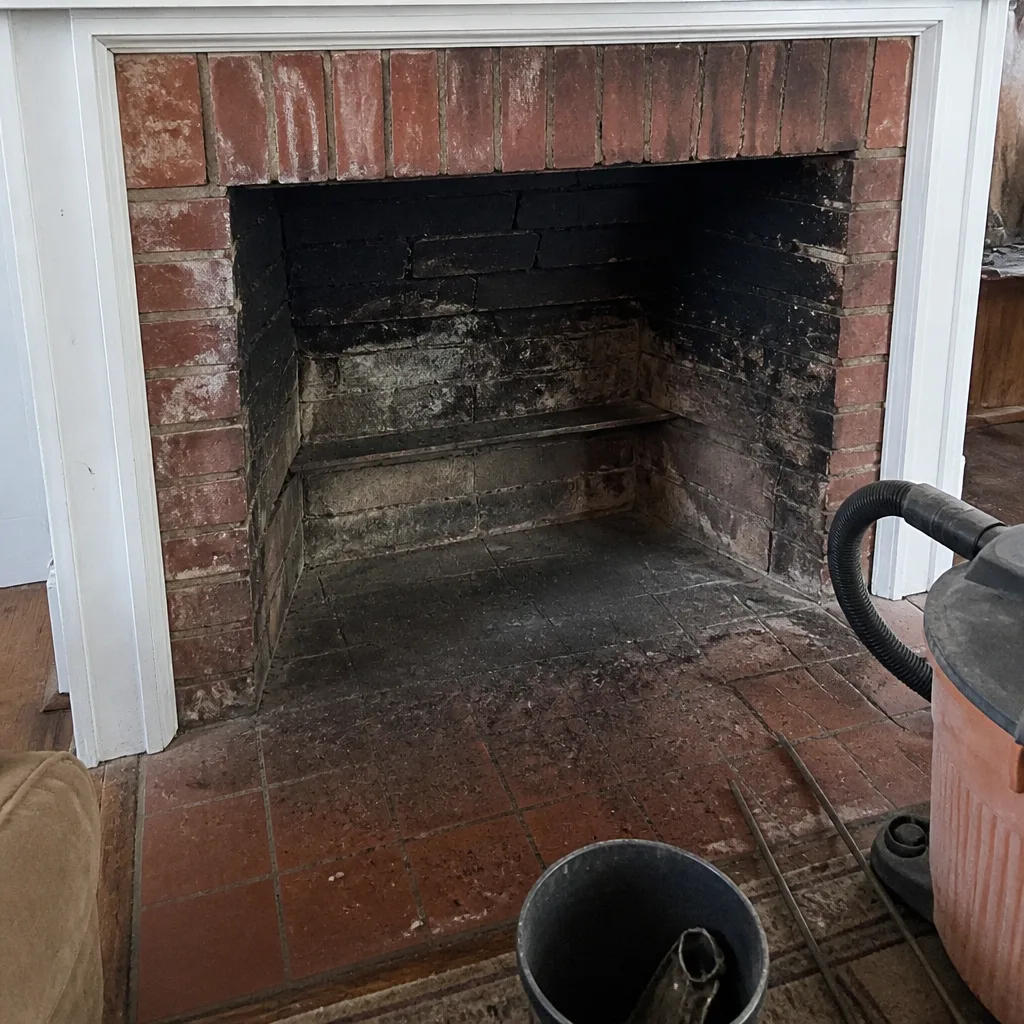
- Rust streaks. Orange or reddish-brown lines running down the damper frame, the smoke shelf, or the firebox walls are a water signal. Water and creosote together produce a corrosive mix that attacks the metal and the mortar.
- White mineral staining. Chalky white deposits inside the firebox or dripping down the face of the brick come from moisture carrying dissolved minerals out as it evaporates. This is the same story as efflorescence outside: water is entering somewhere it shouldn’t.
- Soot patterns. Soot that leaves clean streaks or uneven bands rather than an even dark coating tells a draft story. A smudge of soot in a specific corner, or a pattern that looks like a stain running upward from the damper, often points to a flue that’s not drawing evenly or a liner with a break behind it.
You can also check the damper itself while you have the flashlight out. Open and close it a few times. It should move smoothly, seat fully when closed, and open completely without sticking. A damper that hangs loose, refuses to close fully, or has visible rust is a functional warning sign at minimum and a draft hazard at worst. If the damper won’t open all the way, don’t burn a fire: the flue is partially blocked by its own hardware, and the smoke will find a way out into the room.
One more thing worth noting from the firebox floor: the base of the chimney where the firebox meets the brick.
What Unusual Fire Behavior Tells You
Homeowners often blame poor draft on green wood, but a sluggish, smoke-spilling fire is more often a flue sizing or blockage issue than a fuel problem. Dry wood with the right split size in a flue that’s clear and correctly sized will draw reliably. If your fires have become a fight, the chimney is usually telling you why.
Smoke rolling into the room. When smoke spills out at startup and clears after a few minutes, the flue is cold and needs a warm-up. When it keeps spilling well into the burn, the draft is compromised. Common causes: a blockage (nesting, a fallen cap screen, buildup), a flue too large or too small for the firebox opening, or a liner that’s broken and drawing air from the wrong place.
A fire that won’t catch. Fires that smolder, struggle to ignite, or go out on their own often sit under a cold air column with no upward draw. If that’s new behavior and it used to catch easily, think blockage or liner rather than fuel quality.
Back-puffing. A fire that puffs a little smoke into the room in rhythm with its own combustion is usually starving for air. Old wood-burning units with an undersized flue or a draft that’s fighting a closed-in chimney are common sources. Back-puffing is a poor draft symptom and deserves an inspection before you keep burning.
Uneven burn. A fire that burns hot on one side and slow on the other, or that leans toward one wall of the firebox, can indicate a flue that’s drawing unevenly. Combined with soot patterns from the previous section, this is a strong hint the flue needs eyes on it.
Don’t try to solve a chronic drafting issue with a taller fire, a hotter fuel load, or an open window. If a fire wants to spill smoke, a trained professional can confirm whether the flue is blocked, undersized, or leaking. Smoke spilling back into a room is a carbon monoxide concern as much as a fire concern, which makes it a “stop and call” sign, not a “try again tomorrow” sign.
Exterior Warning Signs You Can Spot From the Ground
You don’t need a ladder or a roof to read your chimney. Stand in the yard with your back to the sun and look up. The chimney top is a diagnostic board, and a few patterns tell you most of what you need to know.
Crown cracking patterns. The crown is the flat concrete slab on top of the chimney that sheds water away from the flue. Look for cracks radiating from the flue outward, or a crumbling, flaking surface. A crown that cracks stops shedding water, and water then runs into the brick and into the flue. This is one of the most common sources of water damage we see in Woodbridge area homes.
Missing mortar wash. The sloped mortar finish on top of the chimney is the second line of defense behind the crown. When it’s gone or cracked, the top courses of brick are exposed to the weather. A hairline crack in a mortar wash turns into spalled brick and loose mortar joints over a few wet seasons. A proper crown repair, done with the right material, restores that protection.
Flashing separation. Where the chimney meets the roof, a metal flashing and its sealant keep water from running down the brick. Look for separation, lifting metal, cracked sealant, or water staining on the chimney brick just below the roofline. Flashing failures leak quietly and often show up months later as stains on a ceiling. A chimney cap & crown job often goes hand-in-hand with flashing repair, because they’re solving the same water problem.
Efflorescence and spalling. The white bloom of efflorescence means moisture is moving through the brick and evaporating at the surface. Spalling (flaking brick faces) is the next stage, where the moisture cycle weakens the masonry. Both point at a water problem higher up. Neither is a fire risk by itself, but both are worth acting on before they turn into a structural repair.
A missing or damaged cap. Look for a missing cap screen, a cap that’s come loose, or one that’s visibly rusted and bent. A good cap from Olympia Chimney or Gelco keeps out rain, spark ejections, and animals. Without one, the flue collects whatever the weather and neighborhood have to offer.
Creosote Stages and Why the Third Stage Changes Everything
Creosote is the tar-like residue that condenses out of wood smoke as it cools on the flue walls. It’s the fuel source for most chimney fires, and it builds in stages that matter enormously for what you should do about it.
- Stage 1: Sooty, flaky coating. A light, dusty black layer that a brush removes easily. This is normal in a working chimney and the reason annual sweeps exist.
- Stage 2: Crumbly, crusty tar. A denser, darker buildup that a standard sweep may or may not fully remove. It clings to the flue surfaces and asks for a more careful sweep.
- Stage 3: Glazed, tar-like coating. A hard, shiny, tar-glazed layer that can look almost like a burned-on glaze. It ignites at high temperatures and is the classic fuel for a chimney fire. A standard brush won’t remove it.
Why the stages matter: Stage 3 creosote doesn’t just look worse, it behaves differently. It burns hot and long once ignited, and the temperature of the flue and the adjacent framing is the reason chimney fires cause so much damage. In many older masonry chimneys, the flue itself has already lost enough integrity that the lining needs resurfacing or relining before the chimney can be used safely again.
How to stay ahead of creosote: burn dry, seasoned wood with a moisture content in the proper range; don’t burn trash, cardboard, or soft wet wood; avoid long, cool smoldering fires; and get a sweep before the burn season starts. For Woodbridge homeowners using a fireplace regularly through the cooler months, an annual inspection and sweep is the simple baseline that keeps creosote out of Stage 3 territory. When we do find Stage 3 buildup or damage underneath it, we can address it directly, from a careful sweep to HeatShield resurfacing of compromised flue tiles or full relining with a DuraFlex system. That’s part of why our fireplace repair and relining work lives under one roof: the material and the repair both live in the same trade.
Warning Signs in Gas Inserts and Older Masonry Chimneys
Gas inserts change the visible signs you’re looking for, so if your home runs a gas unit, the checklist is a little different. The problem is just as real.
Gas insert warning signs. A yellow, lapping flame where the manual calls for a clean blue flame; a flame that lifts off the burner; soot on the glass or on the logs; a smell of unburned gas or a faint metallic or “rotten egg” smell near the unit; or carbon monoxide alarm activation. These are connection, combustion-air, or venting problems. They are never cosmetic and always worth a professional look. Never operate a gas unit you suspect is venting improperly, and never try to diagnose a gas line yourself.
Older masonry chimney warning signs. The signs specific to an older brick chimney are damage to the flue lining and the masonry structure, not buildup alone. Watch for:
- Missing or broken flue tiles, or a gap between tile sections
- Loose or missing mortar joints in the brickwork
- A chimney that leans or shows separation from the house at the roofline
- Heavy spalling on the sides of the chimney, not just the top
Wood-burning fireplaces in older masonry chimneys also show one warning sign gas units don’t: the smell of creosote coming from a flue that hasn’t been burned in a while. That’s the compromised-liner signature from the smell section, and it’s a good reason to call before the burn season opens rather than after.
One important safety note here. Never examine or work inside an electrical panel, on gas lines, or up a steep roof pitch to check your chimney yourself. A flue that’s venting improperly is a carbon monoxide risk, and a steep roof is a fall risk. Those jobs belong to a trained professional. Your role is to spot the signs and call.
How a Technician Reads Your Chimney: A Numbered Walkthrough
If you want to know what happens when a technician arrives, here’s the sequence we follow. It explains why a proper inspection sees things you can’t from the firebox floor.
- The tech walks the exterior first. Crown, mortar wash, cap, flashing, and brick face all get examined from the ground before anyone goes up.
- Inside, the firebox and damper are checked for rust, mineral staining, and soot patterns, and the damper operation is tested.
- A camera inspection goes up the flue to look for liner cracks, gaps, creosote stage, and foreign material.
- Any obstruction gets cleared as part of the sweep, and the technician notes what was found.
- The technician reviews the findings with you, camera evidence and photos included, and separates them into the cosmetic, functional, and safety-critical buckets you’ve been using.
- Only then is a repair recommended, and the written estimate puts the scope and price in front of you before any work begins.
Our technicians use professional-trade materials: HeatShield for flue resurfacing, DuraFlex for flexible liner systems, Olympia Chimney and Gelco caps, and Famco for venting. We’re a chimney-only specialist, meaning the entire arc from inspection to full repair runs through one relationship rather than a separate mason, sweep, and cap installer. If you want to connect this guide to the bigger picture, our Chimney Sweep Woodbridge page is the starting point.
Common Mistakes to Avoid
- Treating a strong smell from a cold fireplace as harmless. That specific creosote or smoke odor is often a compromised liner showing itself. Burning a fire “to see if it clears” can turn a repair into a structural problem. Don’t do it.
- Burning a fire to diagnose a draft problem. If a fire is spilling smoke, back-puffing, or refusing to catch, a fire is what’s producing the carbon monoxide you should be avoiding. Confirm the flue is clear and correctly sized first.
- Skipping the roof check because the fire burns fine. Crown cracks, flashing separation, and a failed cap all develop on the outside of a chimney that still works. The firebox will look perfectly normal until water has done its damage. Look up from the ground at least once a season.
- Assuming a general contractor can read a flue. Chimney work isn’t a standard contractor skill, and resurfacing a flue wall with HeatShield is a specialized application. A chimney-only specialist is worth the call if your findings fall outside the cosmetic tier.
- Waiting for “it to get worse” on a Stage 3 creosote finding. Stage 3 creosote doesn’t get better with age, and a fire in a flue with glazed tar buildup is a chimney fire risk. Get it swept promptly, then address any lining damage underneath.
- Burning green or unseasoned wood to save money. Wet wood produces more creosote because it burns cool and incomplete, which accelerates buildup from Stage 1 to Stage 3. Dry, seasoned wood is the cheapest maintenance plan there is.
- Treating every finding as an emergency, then ignoring the real one. Overreacting to efflorescence and under-reacting to smoke spill is the most expensive combination. Use the severity index: cosmetic, functional, safety-critical.
See the difference
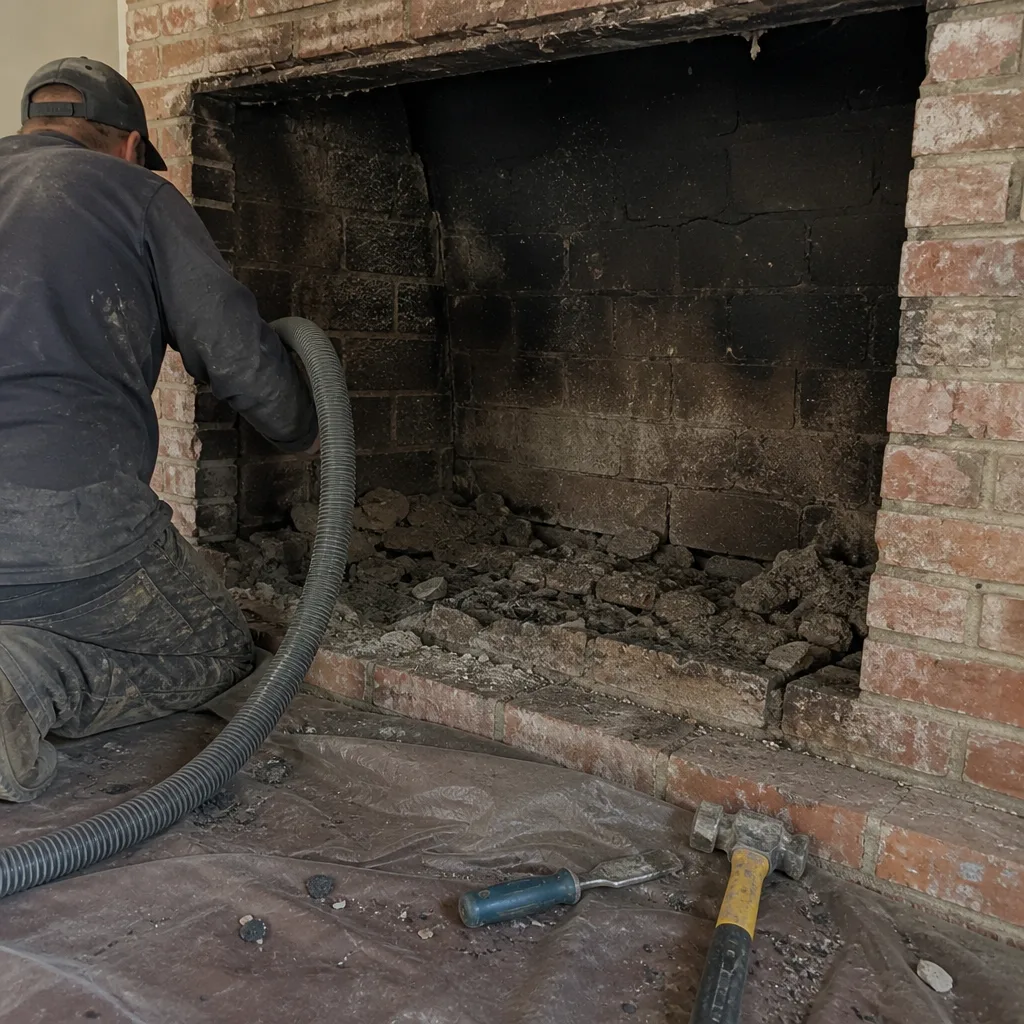 Before
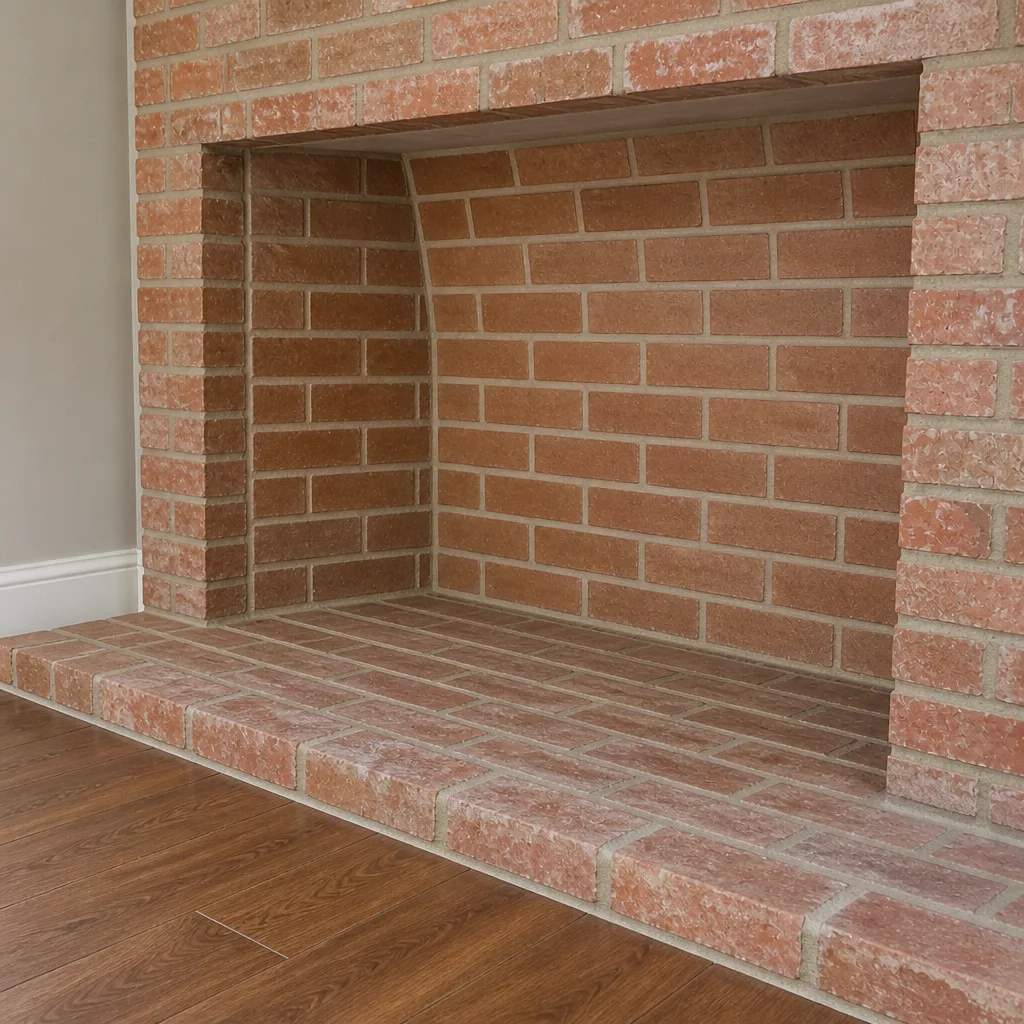 After
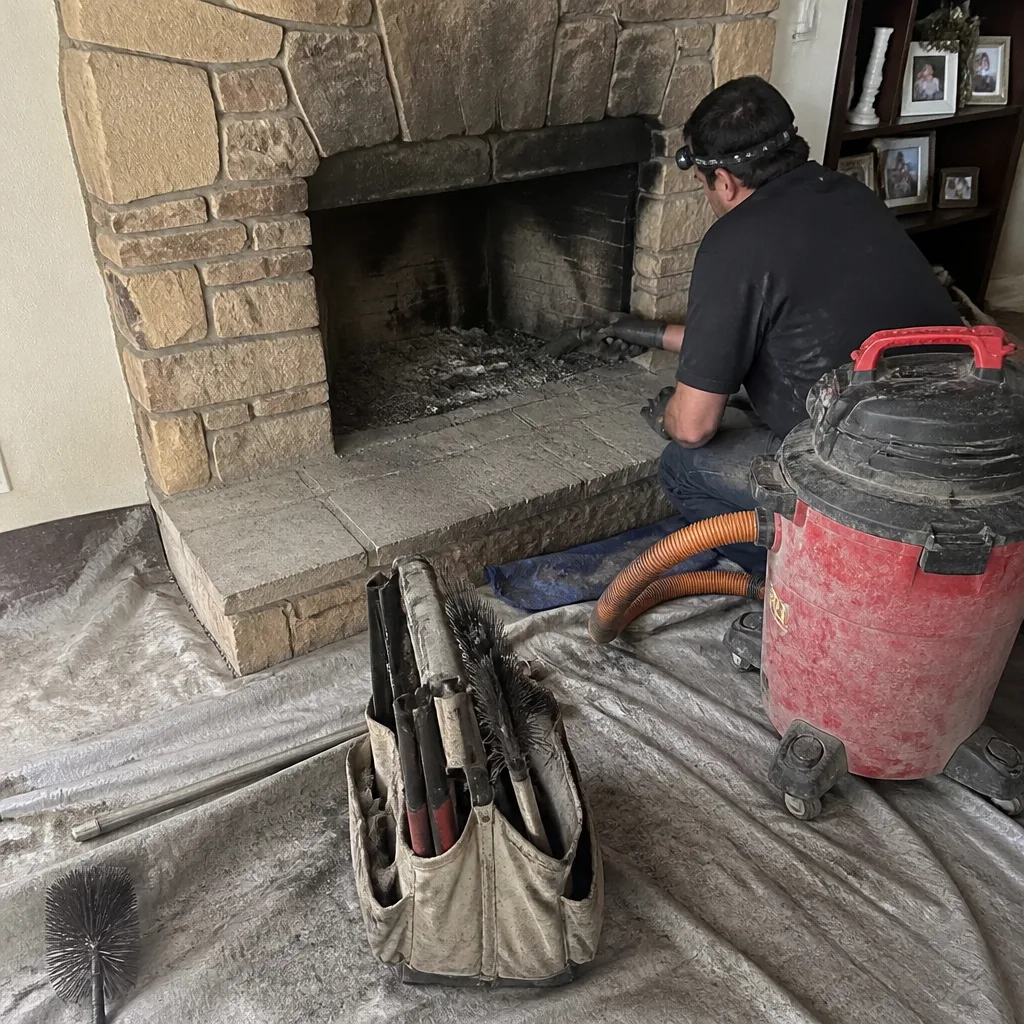 Before
 After
 Before
 After
When to Call a Professional
Call for an inspection if you see or smell any of the following: a smoke or creosote odor from a cold fireplace; smoke spilling into the room during a fire; rust streaks, white staining, or uneven soot in the firebox; cracks in the crown or missing mortar wash visible from the ground; flashing separated from the chimney; a cracked, missing, or broken flue tile; or a gas insert that’s burning yellow, leaving soot, or setting off a carbon monoxide alarm. Call before the burn season opens even if nothing is obviously wrong, because a yearly sweep is how you catch the quiet signs before they compound.
Chimney Sweep Woodbridge offers free estimates in Woodbridge. Call (833) 513-8683. We answer 24/7. Fast dispatch from 7am to 7pm, Sunday through Friday.
Frequently Asked Questions
Schedule-soon signs are cosmetic or functional: efflorescence, minor spalling, a cracked crown, a slightly stiff damper, or a fire that’s a bit harder to start. Don’t-light signs are safety-critical: a strong creosote or smoke smell from a cold fireplace, visible liner fractures, smoke spilling into the room, rust or heavy white staining inside the firebox, or a Stage 3 creosote finding. If the finding is in the safety-critical tier, call (833) 513-8683 before your next fire.
A normal fireplace smells faintly of wood smoke, especially on a cool day, and it comes from a fireplace that’s working. A creosote smell is sharper and more tarry, almost chemical, and is strongest on warm still days or after a fire. A damp, musty smell points to moisture intrusion, and a sharp ammonia-like smell with scratching points to animals. If you’re unsure, that uncertainty is enough reason to have it checked.
A cracked crown is worth addressing even in a mild climate, because its job is to shed water away from the flue and brick. Woodbridge’s winters are mild, but the rain and humidity are real, and water finding a crack is the main way a crown problem becomes a flue and liner problem. Get it inspected and repaired if the crack is more than a hairline or if the crown surface is crumbling.
Stage 1 soot can technically be brushed, but a proper sweep is more than a brush: it’s an inspection that confirms whether the flue is safe to use. Stage 3 glazed creosote won’t come off with a standard brush at all. Beyond safety, a specialist can see damage a homeowner can’t, like a broken flue tile or a gap in the liner behind the creosote. Call (833) 513-8683 if you’re unsure of the stage.
An annual inspection and sweep, once per burn season, is the working baseline for any chimney that sees regular use. If your fireplace is used heavily, if you burn a lot of soft or unseasoned wood, or if you have a newer insert that hasn’t been checked, sooner is better. The right cadence for your specific flue is something a technician can tell you after an inspection. We answer 24/7 to book your sweep.
The failure mode depends on the sign. Ignored creosote builds from Stage 1 toward Stage 3, which is the fuel for a chimney fire. An ignored crown crack lets water into the flue and brick, which weakens the lining over time. An ignored liner fracture allows smoke and carbon monoxide where they can reach the living space. Most of these start small and quietly. A yearly check is how you stop that progression early. Call us for a free estimate and get the answer in writing.
The Bottom Line
Your wood-burning fireplace is a life-safety system, and most of what can go wrong in it is readable without tools: by smell, by sight from the firebox floor, by the way a fire behaves, and by a look up at the chimney from the yard. Sort what you find into cosmetic, functional, and safety-critical, and act on the safety-critical tier right away. Woodbridge homeowners in mild-winter homes sometimes let a sweep slide, but the signs don’t wait for cold weather to appear. When you find a warning sign you can’t place, Chimney Sweep Woodbridge offers free estimates. Call (833) 513-8683. We answer 24/7. Fast dispatch from 7am to 7pm, Sunday through Friday.
Written by the team at Chimney Sweep Woodbridge.