
Last updated November 25, 2026
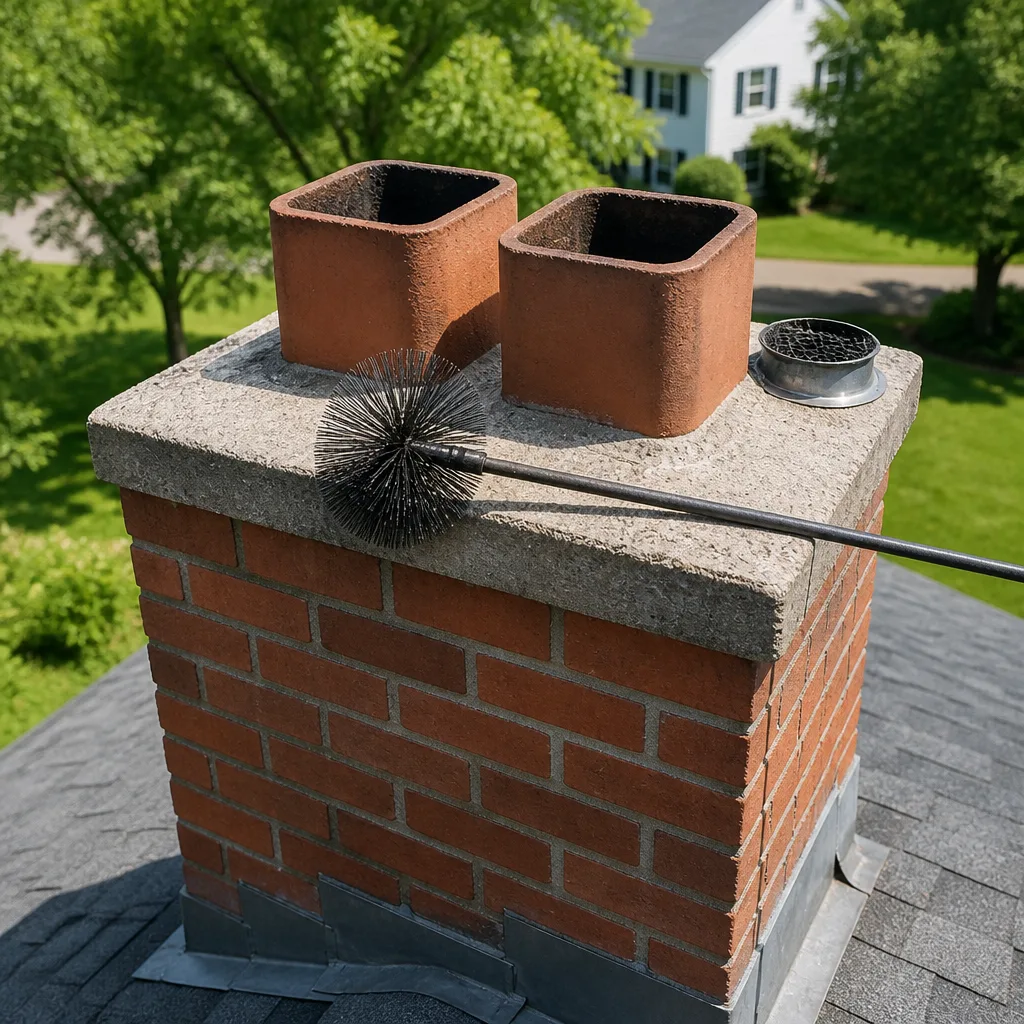 Sweep & inspection
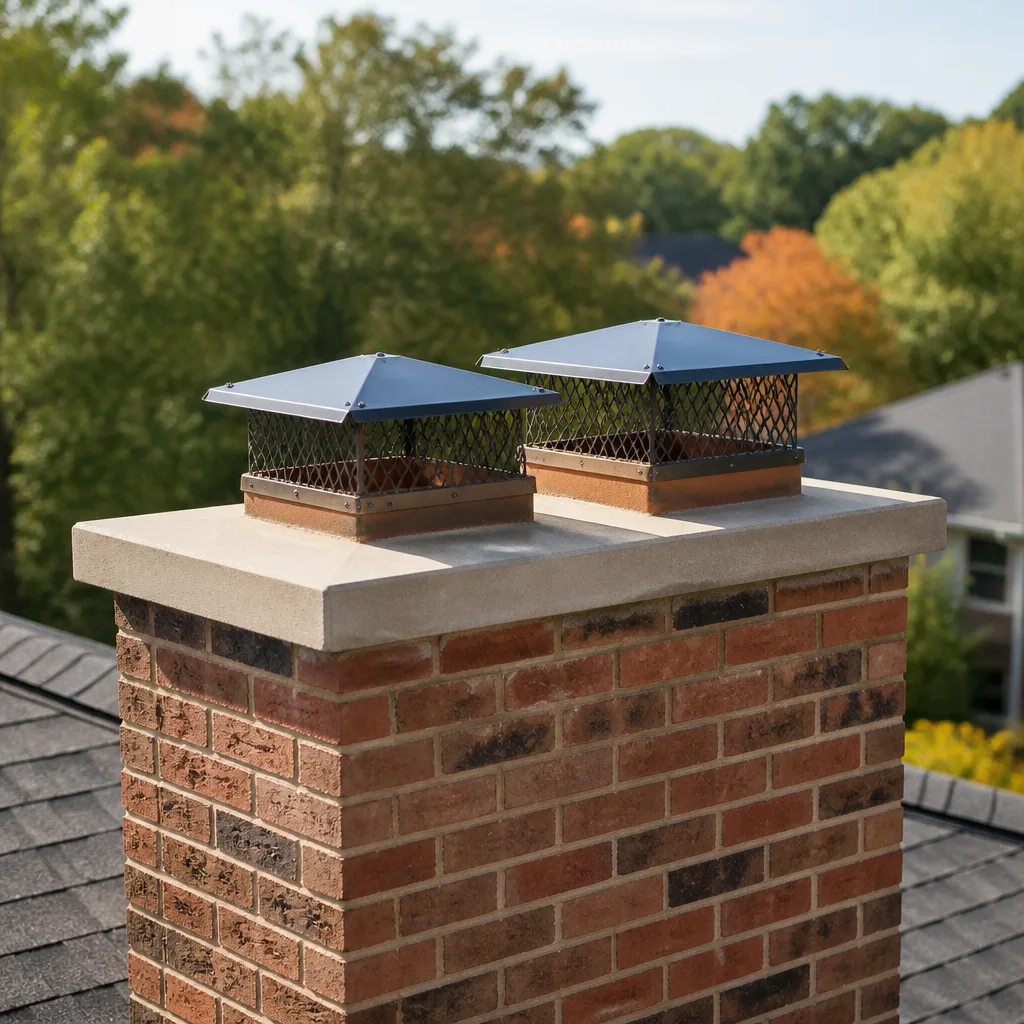 Caps & crowns
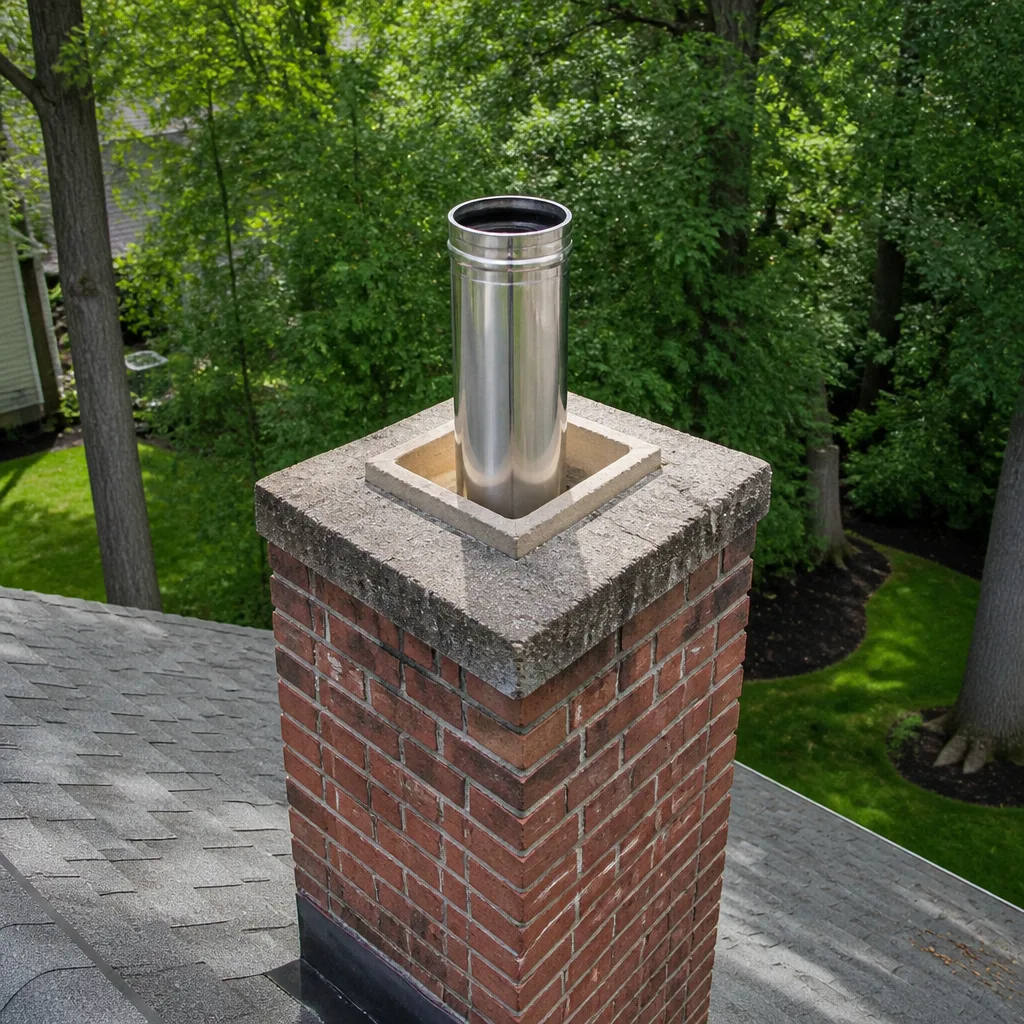 Flue relining
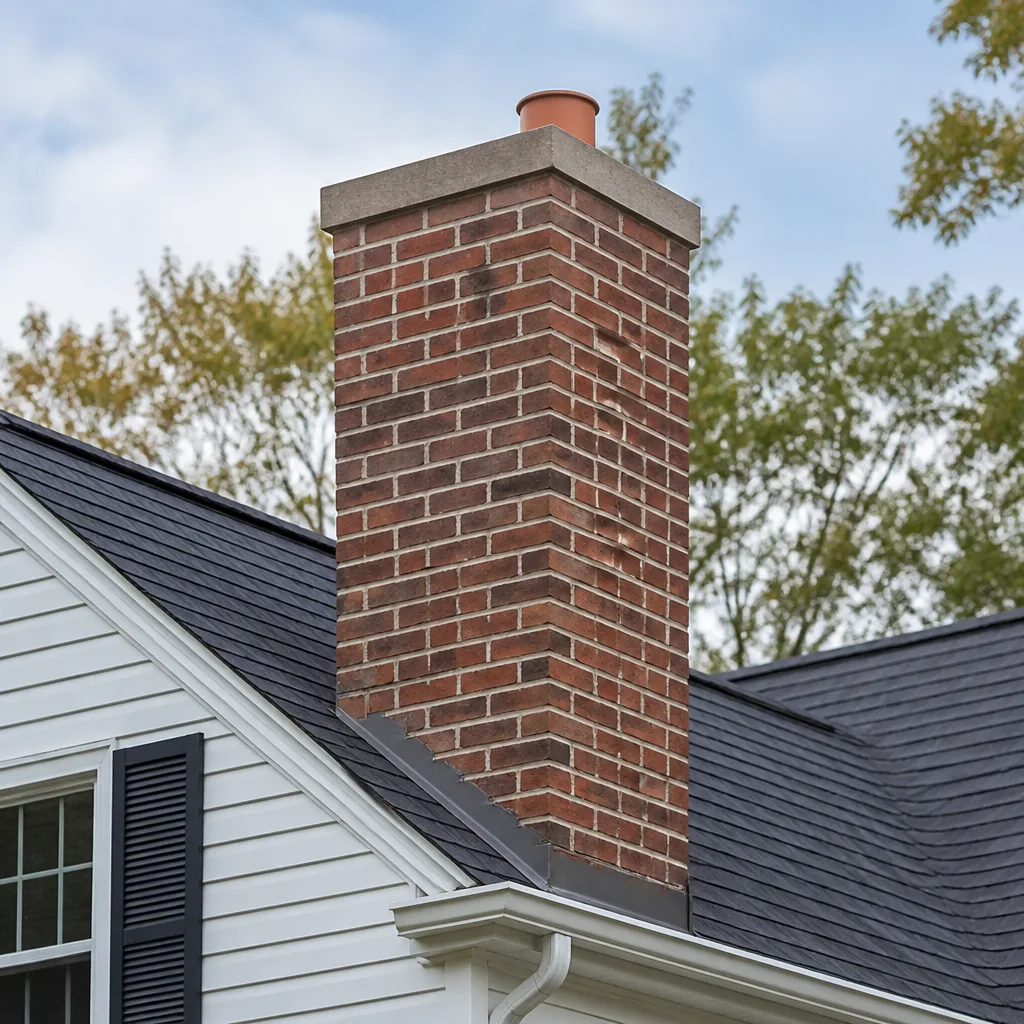 Masonry repair
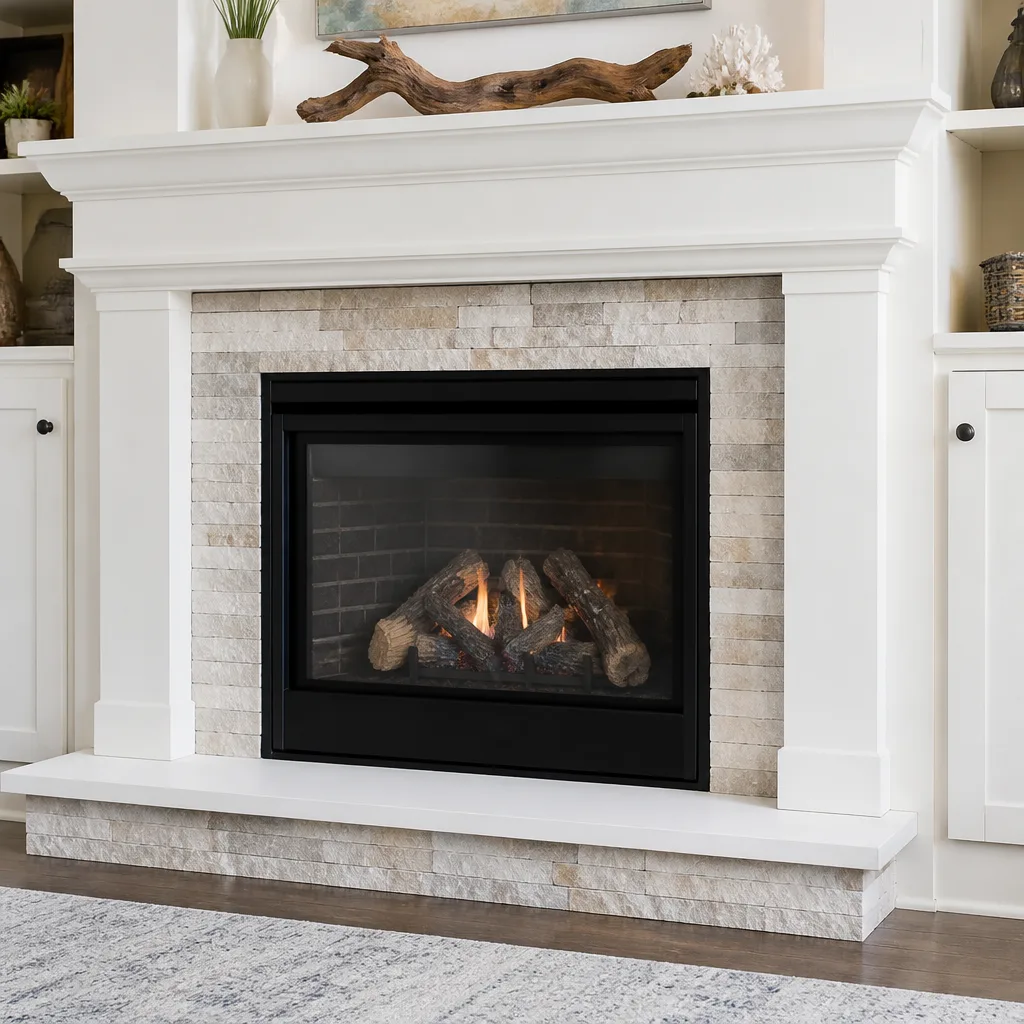 Gas fireplace service
Level 1 sweep and inspection to the NFPA 211 annual standard - flue, crown, cap, and flashing checked and photographed
Chimney sweep logs do not sweep chimneys. They loosen some creosote - which then falls where a brush and vacuum still have to collect it.
DIY vs Professional Chimney Cleaning: The Woodbridge Homeowner’s Decision Guide
Running a brush through a chimney is not difficult. Knowing whether a brush is the right tool for what’s inside is the hard part, and it’s where most DIY chimney cleaning goes wrong. Creosote doesn’t arrive in one form. At Stage 1 it’s a light, flaky dust that a brush handles well. At Stage 2 it’s a hardened, tar-like shell that a brush can mark but won’t remove. At Stage 3 it’s a glazed, fuel-dense coating that looks like black glass and ignites readily. Brushing a Stage 2 or 3 flue doesn’t clean it; it polishes a hazard. This guide gives Woodbridge homeowners a real framework for deciding whether their situation is genuinely DIY-appropriate.
Quick Answer
DIY chimney cleaning is a defensible choice only when four conditions all hold: you burn dry, well-seasoned wood exclusively; you burn frequently enough to know your flue but not enough to have let deposits accumulate for years; your flue is a modern straight run you can assess and access safely; and a pre-work inspection confirms Stage 1 creosote only. If any one of those fails, a professional sweep is the correct call. Liner inspection, smoke chamber evaluation, and structural assessment are never DIY tasks regardless of skill level.
Styles & brands we work with
- Sweep & inspection
- Caps & crowns
- Flue relining
- Masonry repair
- Gas fireplace service
Table of Contents
- The Four-Condition Framework for a DIY Sweep
- Creosote Stages: What You’re Actually Brushing
- Equipment Reality: What a Real Sweep Requires
- What Is Never DIY, Regardless of Skill
- Documentation and Insurance: The Liability Dimension
- A Decision Tree for Woodbridge Homeowners
- Woodbridge’s Climate and Burning Season
- What a Professional Sweep Actually Delivers
The Four-Condition Framework for a DIY Sweep
A DIY sweep makes sense for a narrow category of chimney, and it helps to know exactly which category you’re in before you buy a brush. Four conditions have to be true at the same time. Miss one and you’re either wasting effort or creating a fire risk you didn’t have before.
The first condition is fuel type. Dry, well-seasoned hardwood produces less creosote than green wood, softwood, or any wood that’s been sitting uncovered through a damp fall. If you’ve been burning whatever was available, including construction scraps or treated lumber, you’re already in territory where a brush is the wrong first tool.
The second is burn frequency. A homeowner who lights a fire a dozen times a year has a different deposit profile than one who burns daily from November through February. Frequent burning isn’t disqualifying, but it means deposits accumulate faster and the timeline between sweeps tightens. Infrequent burning makes DIY more reasonable, but only if the chimney has been swept and inspected recently enough that you know the baseline.
The third is flue length and configuration. A straight, vertical flue on a standard single-story or two-story run is accessible and inspectable. An offset flue, a long horizontal connector, a flue serving multiple appliances, or a chimney on a steep roof pitch moves you out of DIY territory quickly. Roof access itself is a real hazard, and not one worth taking on for a routine cleaning.
The fourth and non-negotiable condition is a confirmed Stage 1 deposit. That confirmation cannot come from looking up from the firebox. It requires an actual inspection of the flue interior, and if you can’t verify Stage 1, you don’t have a green light. Many Woodbridge homeowners in the older neighborhoods off Main Street and around the downtown core have masonry chimneys with decades of layered creosote that a brush alone cannot resolve.
Creosote Stages: What You’re Actually Brushing
Creosote is the residue left when wood smoke cools before it exits the flue. It forms in three distinct stages, and the stage determines whether brushing is safe, insufficient, or actively counterproductive.
Stage 1
A light, dusty, flaky deposit that brushes off cleanly. Stage 1 is the only stage a brush removes fully. It’s what a homeowner who burns well-seasoned wood at good temperatures and sweeps annually will typically find. This is the stage where DIY is genuinely defensible.
Stage 2
A hardened, crusty, sometimes shiny coating bonded to the flue wall. A brush cuts grooves into Stage 2 but does not remove it. Running a brush through a Stage 2 flue can create an uneven surface that traps more residue, and the hardened mass stays in place. Removing Stage 2 typically requires chemical treatment followed by mechanical removal with professional equipment, or in severe cases, relining.
Stage 3
A glazed, tar-like deposit with the appearance of black glass. This is fuel-dense and ignites readily. A brush does almost nothing to Stage 3 deposits, and attempting to sweep them is one of the more serious DIY mistakes because it gives the appearance of work done without reducing the hazard. Stage 3 typically means the flue needs a certified inspection to determine whether the liner is intact, and often means relining with a system like DuraFlex.
The key takeaway: brushing only removes Stage 1. If your chimney has progressed to Stage 2 or 3, a brush is the wrong tool. You can’t reliably identify the stage from below, which is why our chimney sweep work begins with inspection rather than brushing.
Equipment Reality: What a Real Sweep Requires
The gap between consumer chimney sweep kits and actual sweep equipment is wider than most hardware store displays suggest. A typical consumer kit includes a nylon brush and a set of flexible fiberglass rods, which is a start. It’s not a full sweep setup.
Here’s what an honest DIY sweep actually requires:
- Whip or wire brushes sized to the flue – one brush size per flue dimension, with proper fit so it makes full wall contact without binding.
- Rigid rods of sufficient length to reach the full flue run, with reliable couplings that won’t separate inside the flue.
- A working vacuum or dust control system with HEPA filtration so dust doesn’t migrate into the house. This alone is a meaningful part of the cost of a professional sweep.
- Drop cloths and containment for the firebox surround.
- Respiratory protection – N95 or better – and eye protection.
- Roof access equipment if the flue has to be swept top-down. Ladders, harnesses, and roof-safe footing are a category of their own.
The realistic cost gap: a consumer kit runs modestly, but a proper full setup with vacuum, whip brush, and rigid rods costs more than several years of annual professional sweeps. And a consumer kit doesn’t include the inspection equipment. What you’re really paying for isn’t the brush – it’s the camera, the trained eye, and the documentation. Our chimney cap & crown work exists because protecting the flue from water intrusion starts above the roofline, not below it.
What Is Never DIY, Regardless of Skill
Some tasks sit outside DIY territory entirely. These aren’t homeowner-skill issues; they’re judgment and liability issues.
- Liner inspection. The flue liner is the component that keeps heat and combustion gases away from the surrounding structure. Evaluating liner integrity requires a camera and the experience to read what the camera shows. A visual look up from the firebox reveals a fraction of the flue interior.
- Smoke chamber evaluation. The smoke chamber – the transition zone between the firebox and the flue – is irregularly shaped and prone to creosote buildup that brushes don’t reach. Evaluating it and parging it is specialist work.
- Structural assessment. Cracked flue tiles, spalling brick, and crown deterioration are structural findings. A homeowner can spot a cracked crown from the ground with binoculars. Deciding what it means and how to fix it isn’t a homeowner assessment.
- Relining. Full relining with a flexible system is structural work that requires sizing, calculating, and installation. It isn’t a DIY category at any skill level.
- Chimney cap and crown work. This is roofline work on a structure that must shed water for decades. The materials matter: Gelco and Olympia Chimney caps are specified because they hold up to the actual conditions, not because they’re cheaper.
In our experience as chimney-only specialists, this is where most DIY sweeps fall short. The brush works fine. The inspection that should follow it doesn’t happen, and the underlying issue – a failing liner, water intrusion, a broken crown – stays hidden. Our fireplace repair and structural repair work exists because those findings need a specialist, not a generalist. We apply HeatShield to compromised flue tiles and install DuraFlex liner systems, both of which fall outside what a brush can address.
Documentation and Insurance: The Liability Dimension
This is the part of the decision most homeowners never consider until they’re in a claim, and it’s a real reason to weigh carefully before going DIY.
Home insurance policies generally expect reasonable maintenance. When a chimney fire occurs, the insurer will look at the cause and the maintenance history. If there’s a documented annual sweep and inspection, that’s a record of due care. If there’s no documentation at all, or if the homeowner performed the sweep themselves with no record of what was found and when, the adjuster has a different picture to work from.
What a documented sweep provides:
- A dated service record showing when the flue was last cleaned and what was found.
- A camera inspection report, with images, showing liner condition at the time of service.
- A paper trail that demonstrates the homeowner acted on professional findings.
If a fire occurs after a self-performed sweep with no documentation, the insurer can argue the homeowner took on the maintenance role and can’t show the work met the standard. That argument may or may not override the claim, but it’s a fight no homeowner needs during a loss. This is one of the strongest practical arguments for the professional route even when the chimney itself is a plausible DIY case. It’s also why we include camera inspection and a photo report with every sweep – the documentation is part of the service.
Our technicians have up to 11 years of experience reading what those reports mean, and the value is in the report as much as the cleaning.
A Decision Tree for Woodbridge Homeowners
If you want a straight answer on whether your situation qualifies for DIY, walk through these questions in order. Stop at the first “no” and book a professional sweep.
- Has your chimney been inspected in the last year? If no, stop here. You don’t know what’s in the flue, and DIY without a baseline assessment isn’t a defensible decision.
- Have you burned only dry, seasoned wood? If you’ve burned green wood, softwood, or scraps, the deposit profile is uncertain. Stop and book.
- Is your flue straight, vertical, and accessible? If it has offsets, a horizontal run, or requires roof access you’re not equipped for, stop.
- Did your inspection confirm Stage 1 creosote only? If it found Stage 2 or 3, stop. A brush is not the right tool.
- Is the liner intact per the inspection report? If the liner has cracks, gaps, or deterioration, stop. Sweeping a compromised liner can dislodge material into that damage.
- Do you have a proper vacuum, properly sized brushes, and dust control? If you’re working with a consumer kit and a shop vac, reconsider.
- Do you have a reason to expect no documentation will be needed? If you’d want a service record for insurance, stop and book a professional.
If you got all the way to the last question with “yes,” DIY is a defensible choice for this round. If you stopped earlier, that’s useful information. For a proper baseline, start with an inspection, then decide. Chimney Sweep Woodbridge offers free estimates, and a sweep from our team includes the camera inspection and photo report that gives you the factual base to make the call next time.
Woodbridge’s Climate and Burning Season
Woodbridge’s mild winters shape the burning season and, with it, the creosote timeline. A mild winter doesn’t mean a safe chimney; it means the fire is often burning at lower, smoldering temperatures on cool fall mornings and evenings, which is exactly the condition that forms creosote. Cool flues and slow, smoky fires leave more deposit than hot, active burns, and the shoulder seasons around Woodbridge produce more of those conditions than the middle of a cold snap would.
What that means practically:
The first fires of the season in Woodbridge tend to be the smokiest, and they leave the richest deposits. A sweep in late summer or early fall, before the first burn, gives you a clean flue going into the season. A mid-winter sweep catches what accumulated during the first burn cycles. If you burn continuously from November through February, one mid-season sweep is a reasonable practice in Woodbridge even for a homeowner who’d otherwise DIY annually.
The other local factor is chimney exposure. Woodbridge’s mix of older masonry chimneys and newer construction means some chimneys have clay flue tiles that are decades old and are candidates for cracking, and others have modern liners in good condition. The two profiles call for completely different service timelines. An inspection tells you which one you have. Without that, you’re guessing.
Our team at Chimney Sweep Woodbridge works exclusively on chimneys across Woodbridge, from the older households near the downtown core to newer construction on the edges of town. Because we work only on chimneys, we see the local patterns clearly, and we can tell you honestly whether you’re a DIY candidate or not.
What a Professional Sweep Actually Delivers
It’s worth being specific about what a professional sweep includes, because the phrase “chimney sweep” gets used loosely. A real sweep from a chimney-only specialist means the following, and it’s more than cleaning.
- Camera inspection of the flue interior, including the smoke chamber and the top of the liner.
- A photo report documenting what was found and its condition, so you have a record.
- Cleaning sized correctly to the flue, with whip and wire brushes matched to your flue geometry.
- Creosote stage identification and, if Stage 2 or 3 is present, a treatment plan rather than a brush pass.
- Assessment of the cap, crown, and rain exposure, since water intrusion is a leading cause of chimney deterioration.
- An honest recommendation on what needs to happen now and what can safely wait.
A first sweep is also where we find the issues that never surface from a DIY brush pass: a cracked flue tile, a failed cap, a crown that’s spalling. If the sweep reveals liner damage, the next conversation is potentially relining with a system such as DuraFlex, or resurfacing compromised tiles with HeatShield. If it reveals a failing cap or crown, we install Gelco or Olympia Chimney caps and new crowns because that’s what protects the flue from the top down. Famco venting components come up where venting is part of the picture.
The point isn’t to scare you into a service. It’s that the sweep is the appointment where those problems are found, and the materials and skills to fix them are in the same service relationship. The right material for the job matters here – hardware-store consumables aren’t the products certified restoration work is done with, and we don’t use them.
Common Mistakes to Avoid
- Brushing a chimney you’ve never had inspected. You don’t know the creosote stage or the liner condition until someone looks. Sweeping blind is the most common way DIY goes wrong in Woodbridge.
- Using a consumer kit’s nylon brush on a hardened deposit. If the deposit is Stage 2 or 3, the brush won’t remove it, and the appearance of a sweep creates false confidence going into the burning season.
- Sweeping a flue with a compromised liner. A cracked or gapped liner can let dislodged material into the surrounding structure. The inspection has to come first.
- Treating the smoke chamber as an afterthought. It’s irregular, prone to buildup, and not something a homeowner can evaluate. Skipping it leaves the most fire-prone area of the chimney unaddressed.
- Burning green or unseasoned wood to save money on fuel. It’s the fastest route to Stage 2 deposits, and it makes a DIY sweep less effective, not more.
- Assuming a mild Woodbridge winter means less creosote. Slow, smoldering burns on cool mornings are exactly what form deposits. Frequency of burning, not severity of winter, drives accumulation.
- Going DIY and keeping no record. If a claim ever comes up, an undocumented sweep and no inspection look nothing like due care on paper.
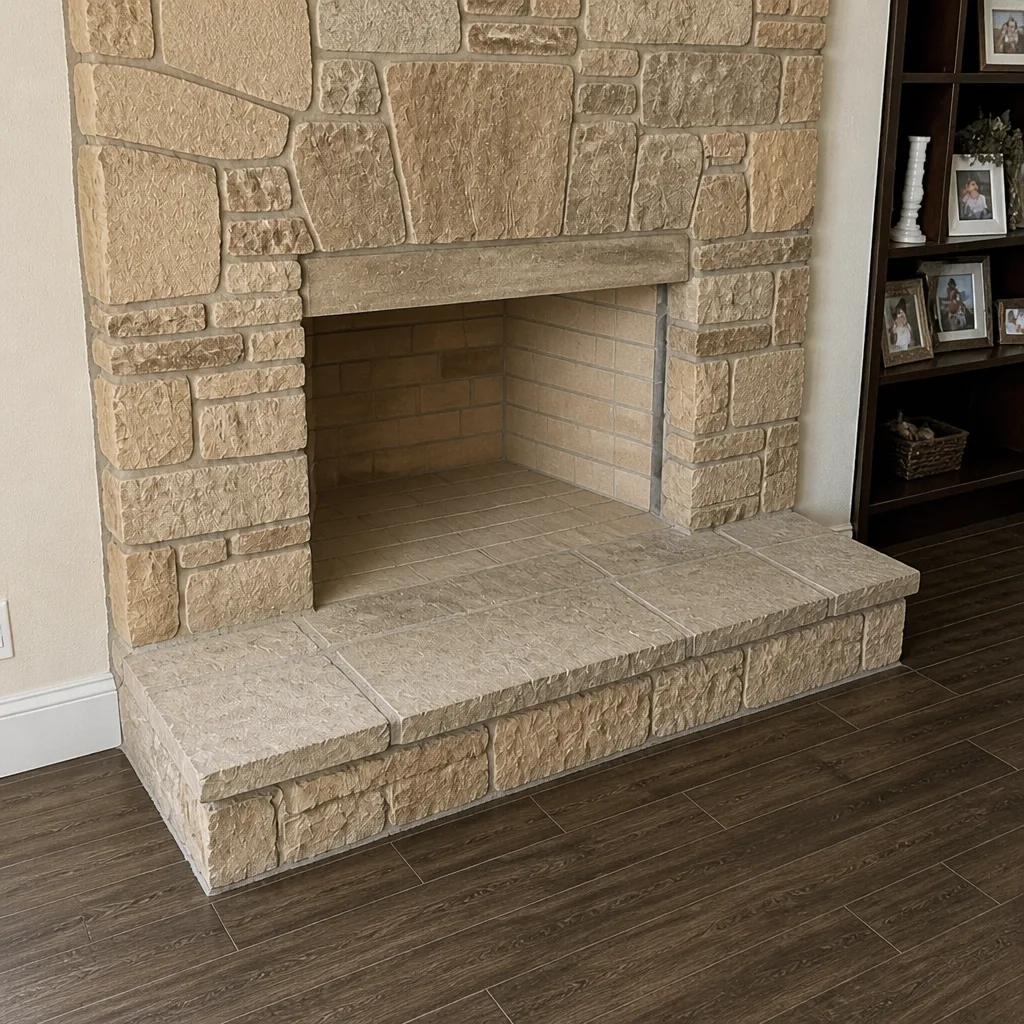
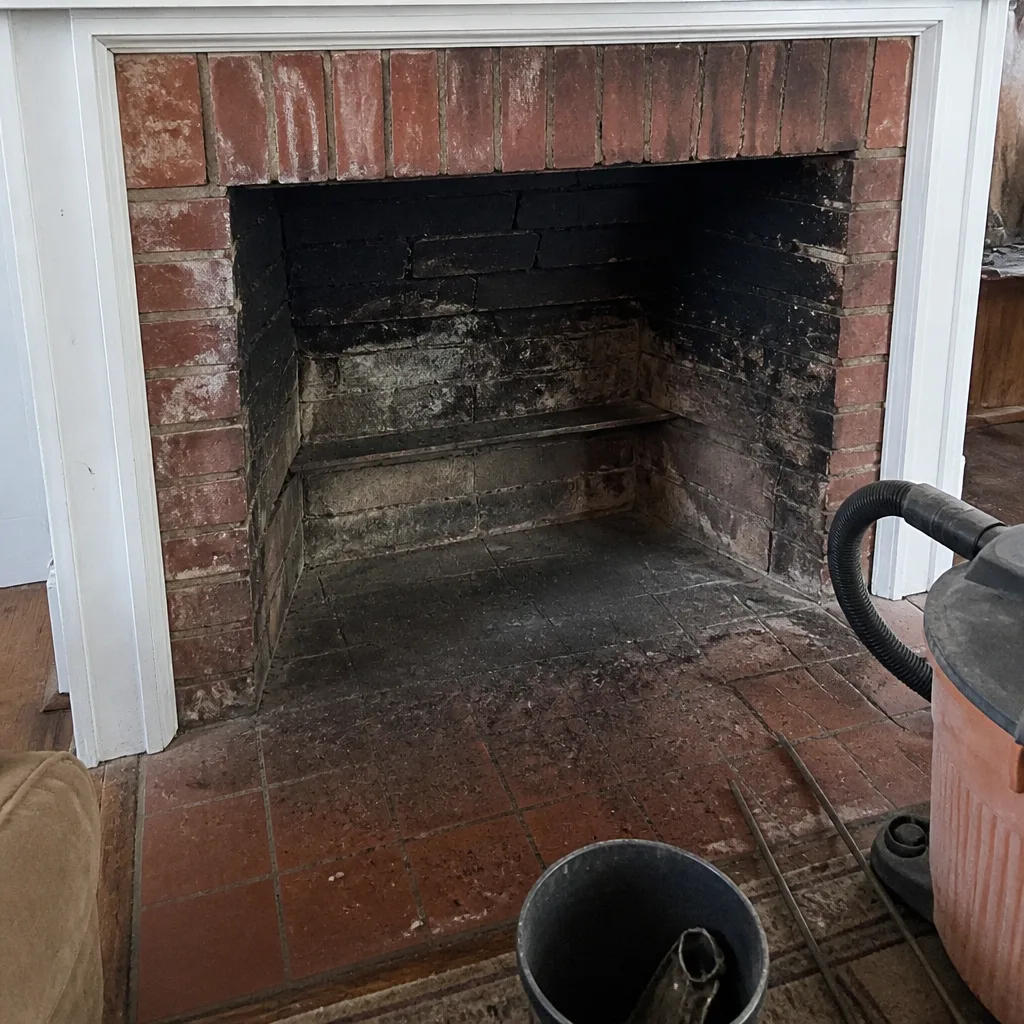
See the difference
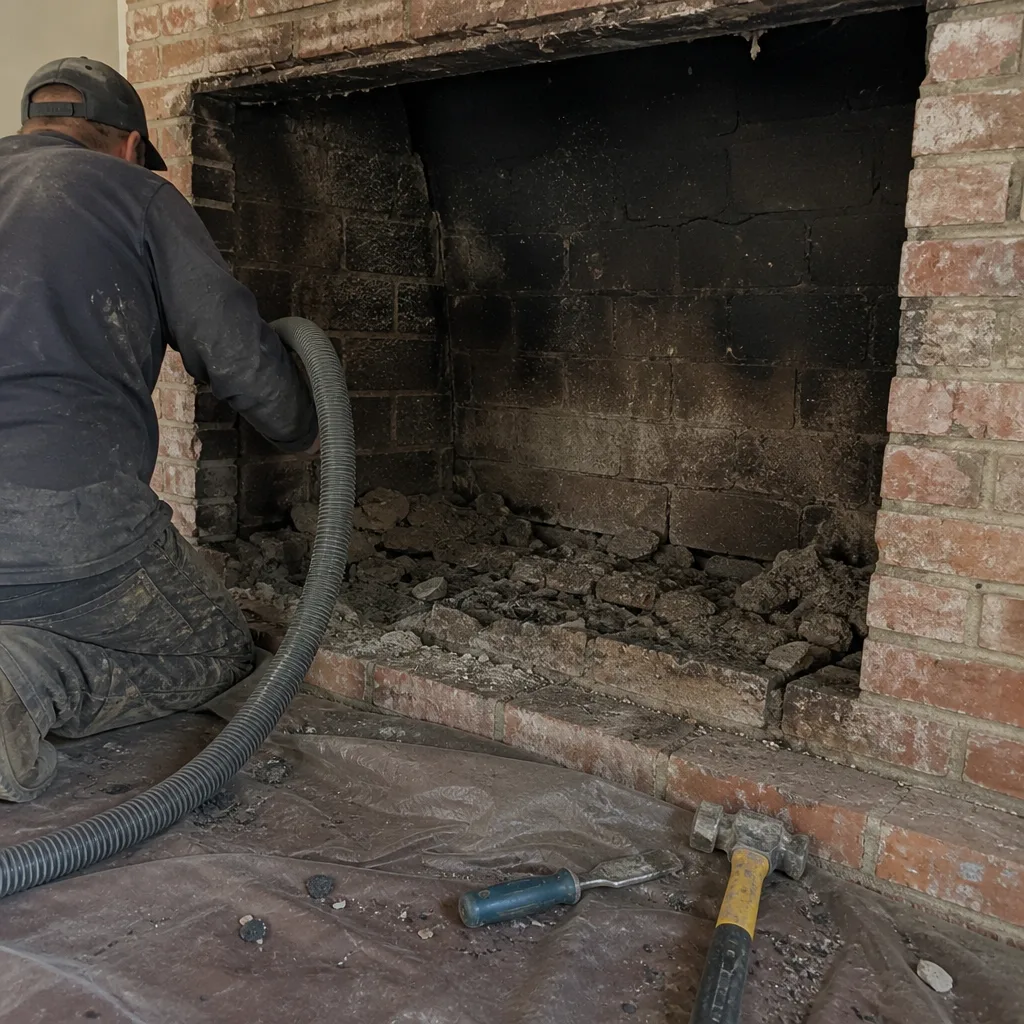 Before
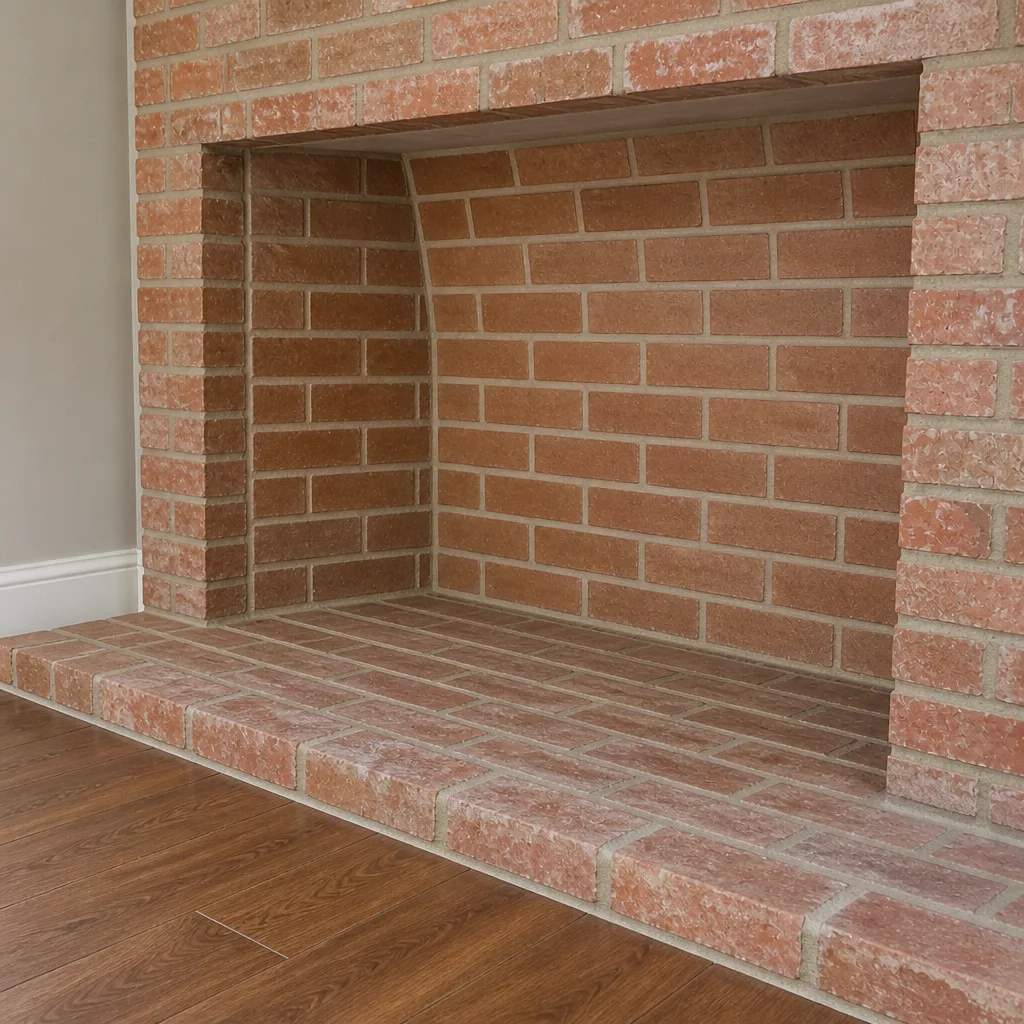 After
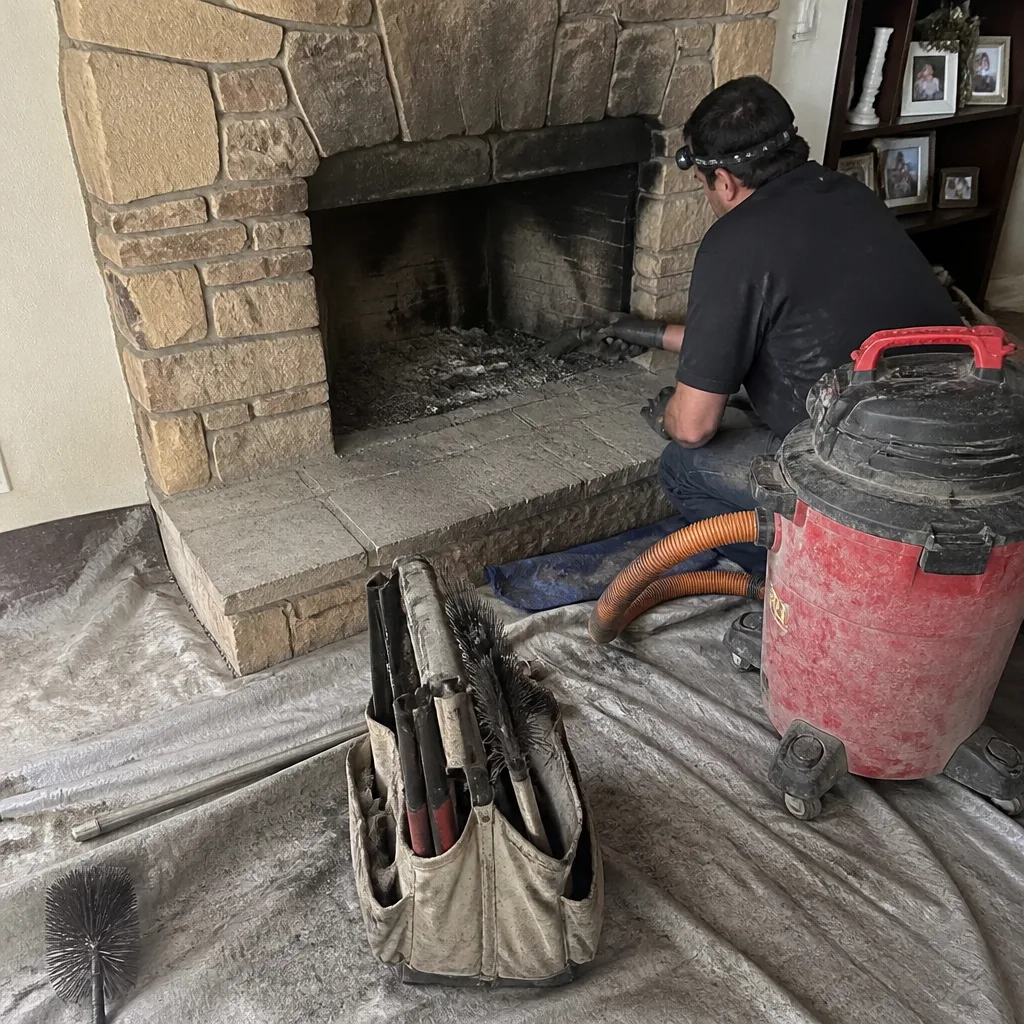 Before
 After
 Before
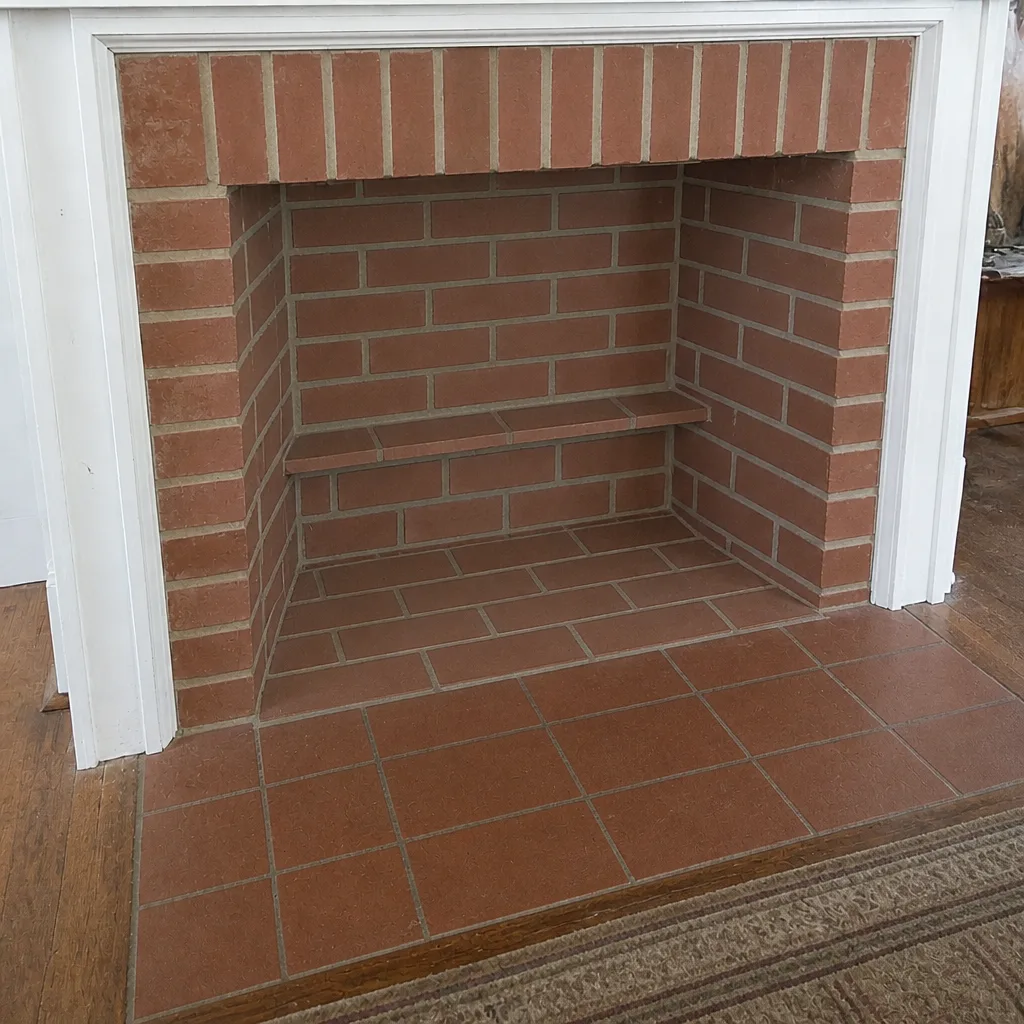 After
When to Call a Professional
Call a professional if any of these applies: your chimney hasn’t been inspected in the last year; you’ve seen cracked or spalling brick, a deteriorating crown, or water staining in the firebox; you notice poor draft or smoke rolling into the room; you’ve burned green wood or scrap; your flue is on a steep roof or has offsets; or you’ve already brushed the flue and aren’t sure you got it all. In our experience, the most common trigger for a professional call is the second category – a homeowner who noticed a problem, brushed the chimney anyway, and wants a real answer about whether it’s safe. Chimney Sweep Woodbridge offers free estimates in Woodbridge. Call (833) 513-8683. We answer 24/7. Fast dispatch from 7am to 7pm, Sunday through Friday.
Frequently Asked Questions
Yes, but only if four conditions all hold: you burn dry seasoned wood exclusively, you burn frequently enough to know your flue but not so much that deposits have accumulated over years, your flue is straight and accessible, and a pre-work inspection confirms Stage 1 creosote only. If any one fails, a professional sweep is the correct choice. Call (833) 513-8683 for an inspection and an exact quote – estimates are free.
You can’t reliably tell from the firebox. Stage 1 is a light, flaky dust that brushes off. Stage 2 is a hardened, crusty coating that a brush won’t remove. Stage 3 is glazed and tar-like. Distinguishing them requires a camera inspection of the flue. Book a professional inspection before you commit to DIY or to a brush you aren’t sure will do the job.
It can complicate the claim. Insurers look for documentation of maintenance, and a self-performed sweep with no record and no inspection report gives the adjuster little to work with. A documented sweep with a photo report demonstrates due care. That’s a real reason to book a professional sweep even when the chimney is technically a DIY case. Call (833) 513-8683 for an exact quote – estimates are free.
Most Woodbridge chimneys should be swept and inspected annually, ideally in late summer or early fall before the first burn of the season. If you burn continuously through a mild Woodbridge winter, a mid-season sweep is reasonable. Chimneys with older clay flue tiles should be inspected annually regardless of burn frequency, because tile cracking isn’t visible from below.
A hardware-store kit is a basic tool, not a full sweep setup. It typically lacks the vacuum, properly sized whip brushes, and inspection camera that a real sweep requires. It can remove Stage 1 deposit but can’t identify whether the deposit is Stage 1. For occasional, well-documented Stage 1 cleaning, a kit is workable; for anything else, it’s inadequate.
Book an inspection to establish what’s actually in the flue and whether the liner is intact. A camera inspection confirms whether the sweep was effective and whether any Stage 2 or 3 deposit remains. If the inspection finds a problem, that’s exactly the point where a specialist should be in the picture. Call (833) 513-8683 for an exact quote – estimates are free.
Creosote accumulates stage by stage, and the fire risk rises with it. Stage 3 deposit is the most fire-prone, and a chimney fire can damage the liner and the surrounding structure without the homeowner knowing it happened. Skipping a year isn’t automatically dangerous; skipping several years with no inspection is. Book a sweep before the next burning season.
The Bottom Line
DIY chimney cleaning is a real option for a narrow case: dry wood, a straight accessible flue, a known Stage 1 deposit from a recent inspection, and a homeowner equipped to do a proper job. Outside that case, a brush is the wrong tool and the professional sweep is the correct answer. The three things a DIY sweep can’t provide – creosote stage identification, liner and smoke chamber inspection, and documented maintenance records for insurance – are exactly the things that matter most. Our technicians have up to 11 years of experience, and the full-lifecycle scope covers the sweep, the inspection, and the repair in one relationship.
Whether you decide to go DIY this round or book a professional sweep, the honest answer is that the decision starts with an inspection, not a brush. Chimney Sweep Woodbridge offers free estimates in Woodbridge. Call (833) 513-8683. We answer 24/7. Fast dispatch from 7am to 7pm, Sunday through Friday. We’re chimney-only specialists, so the answer you get is about your chimney, not a sales plan.
Written by the team at Chimney Sweep Woodbridge.